If you’ve been searching for a small, low-shedding, incredibly affectionate companion dog that thrives in apartments, bonds deeply with families, and makes even strangers smile — you may have just found your perfect match.
The Mini Havapoo is a designer crossbreed that blends two of the most lovable small dog breeds in the world: the Havanese — Cuba’s only native dog breed — and the brilliantly intelligent Miniature Poodle. The result is a teddy-bear dog with a huge personality packed into a tiny frame.
But as with any dog, the full picture matters. This guide covers everything from what “Mini Havapoo” really means, to their health risks, daily care needs, what they eat, how to groom them, and how to find a reputable breeder. Let’s get started.
1. What Is a Mini Havapoo?
A Mini Havapoo (also called a Havadoodle, Poovanese, or Havanese Poodle mix) is a designer hybrid dog created by crossing a purebred Havanese with a purebred Miniature Poodle. The “Mini” in the name comes specifically from the Miniature Poodle parent — as opposed to a Toy Havapoo, which uses a Toy Poodle and produces an even smaller dog.
Unlike purebreds, the Mini Havapoo is not recognized by the American Kennel Club (AKC), United Kennel Club (UKC), or any major international registry. There is no official breed standard. But that hasn’t slowed their popularity one bit — in fact, the Havapoo consistently ranks among the most searched designer breeds in the United States, and for very good reason.
What makes a Mini Havapoo so special? It comes down to what each parent brings to the mix:
| Parent Breed | Origin | Key Traits They Contribute |
|---|---|---|
| Havanese | Cuba — Cuba’s only native dog breed | Affectionate nature, sociable personality, silky coat, adaptability, gentle temperament |
| Miniature Poodle | Germany / France — bred as water retrievers | Intelligence (2nd smartest breed), low-shedding curly coat, trainability, athleticism, allergy-friendly qualities |
The Mini Havapoo is often described as “the best of both worlds” — and in this case, that’s not marketing fluff. The Havanese’s warmth combined with the Poodle’s intelligence really does produce a dog that’s unusually trainable, unusually gentle, and unusually devoted to its family.
Ready to see available puppies? Browse our Havapoo puppies for sale at PuppyHeaven — all from personally vetted, health-focused breeders.
2. Origin & History of the Mini Havapoo
To understand the Mini Havapoo, you need to understand where its parents came from — because those histories directly shape the dog you’ll bring home.
The Havanese — Cuba’s Royal Companion
The Havanese is the national dog of Cuba and the country’s only native breed. Descended from small companion dogs brought to Cuba by Spanish settlers in the 1500s, the Havanese evolved over centuries into a refined lap dog favored by Cuba’s aristocracy and wealthy families. When Cuban exiles fled to the United States after 1959, many brought their beloved Havanese with them — and the breed quickly found fans in America. The AKC officially recognized the Havanese in 1996. They are known for their silky, non-shedding coats, outgoing personalities, and near-legendary tolerance for human company.
The Miniature Poodle — Intelligence in a Compact Package
Poodles originated in Germany as working water retrievers, but became so beloved in France that the French made them their national dog. The Miniature Poodle was developed to be a slightly smaller version that could work as a truffle-hunting dog and companion. Today, Poodles are ranked as the second most intelligent dog breed in the world (behind only the Border Collie), a trait that passes reliably to every Poodle mix. They’re also famously low-shedding — their dense, curly coats trap loose hair rather than releasing it, making them a popular choice for allergy-prone families.
The Havapoo Is Born
The intentional breeding of Havanese and Poodles began in the United States in the 1980s and 1990s, during the same wave of designer breed development that produced the Labradoodle and Goldendoodle. Breeders aimed to combine the Havanese’s joyful, people-loving personality with the Poodle’s intelligence and hypoallergenic coat — creating a small, trainable, allergy-friendlier companion dog. The experiment was a resounding success. Today, the Mini Havapoo is one of the most popular and sought-after small designer dogs in the country.
3. Mini Havapoo Size & Weight Chart
One of the most common questions buyers ask is: “How big will my Havapoo get?” The honest answer is: it depends on the Poodle parent used. Here’s a clear breakdown of the different size variations:
| Havapoo Type | Poodle Parent | Adult Weight | Adult Height |
|---|---|---|---|
| Toy Havapoo | Toy Poodle (4–6 lbs) | 7 – 10 lbs | 8 – 10 inches |
| Mini Havapoo ⭐ | Miniature Poodle (10–15 lbs) | 10 – 20 lbs | 9 – 15 inches |
| Standard Havapoo | Standard Poodle (40–70 lbs) | 20 – 30 lbs | 15 – 18 inches |
The Mini Havapoo — using a Miniature Poodle parent — hits the sweet spot for most families. It’s small enough for apartment living and easy travel, but sturdy enough to handle everyday family life without the fragility concerns of a Toy or Teacup-sized dog.
Puppy Growth Timeline
| Age | Estimated Weight (Mini Havapoo) | Key Milestone |
|---|---|---|
| 8 Weeks | 1.5 – 3 lbs | Ready to go to new home |
| 3 Months | 3 – 6 lbs | Rapid growth phase begins |
| 6 Months | 6 – 12 lbs | Approximately 70–80% of adult size |
| 8 Months | 8 – 16 lbs | Growth begins to slow |
| 12 Months | 10 – 18 lbs | Most Mini Havapoos fully grown |
| 14 – 16 Months | 10 – 20 lbs | Final adult size reached (some larger ones take longer) |
Want to track your puppy’s development week by week? Our puppy growth stages guide gives you a full milestone tracker from birth to adulthood.
4. Appearance: Coat Types, Colors & Physical Features
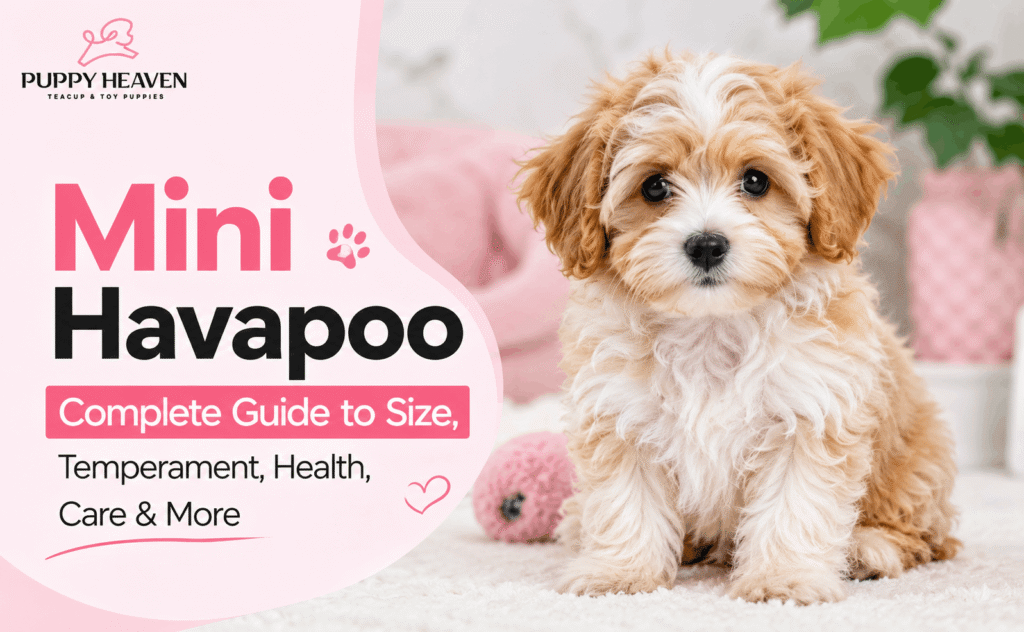
The Mini Havapoo’s appearance is one of the reasons they’ve gone viral on social media. That signature “teddy bear” look — round expressive eyes, a soft button nose, fluffy floppy ears, and a coat you just want to bury your hands in — is almost universally irresistible.
Physical Features
- Head: Small and round with a slightly domed top
- Eyes: Dark, round, and deeply expressive — the “soulful” quality comes straight from the Havanese
- Nose: Small black button nose
- Ears: Floppy, set high, covered in soft wavy or curly fur
- Body: Compact and well-proportioned — sturdy but light
- Tail: Curved and fluffy, carried up — a signature Havanese trait
- Legs: Fine-boned but not fragile; shows the Poodle’s athletic stance
Coat Types
The coat a Mini Havapoo inherits depends on which parent’s genetics dominate:
- Curly Coat (Poodle-dominant): Tight, dense curls close to the body. Lowest shedding of all coat types. Requires the most regular brushing to prevent matting — mats form quickly under the curls without daily maintenance.
- Wavy Coat (Balanced mix): Soft, loose waves. The most popular and manageable coat type. Low shedding. Looks like the classic “doodle” coat and has that signature fluffy teddy-bear appearance.
- Silky/Straight Coat (Havanese-dominant): Longer, silkier, more like the Havanese’s trademark double coat. Still low-shedding but brushes out more easily. Beautiful but needs daily attention to avoid tangles.
Colors
Mini Havapoos come in an exceptional range of colors — one of the broadest of any designer breed. Common colors include:
- ⚫ Black — Solid jet black, very striking
- 🤍 White / Cream — Classic and clean
- 🟤 Chocolate / Brown — Rich warm brown tones
- 🟠 Apricot / Gold — Warm honey and apricot shades
- 🔴 Red / Fawn — Deep reddish-brown
- 🩶 Silver / Gray / Blue — Rare and elegant
- 🎨 Parti-Color — Two or more colors in patches (very popular)
- 🐆 Sable — Multi-toned with darker tips
- 🦓 Brindle — Striped pattern, relatively rare
- 🌀 Phantom — Two-color pattern with specific markings (like a Doberman’s pattern)
5. Mini Havapoo Temperament & Personality
If you ask Mini Havapoo owners what they love most about their dog, almost all of them give the same answer: the personality. This is not a dog that simply lives in your home — it’s a dog that becomes the heart of your home.
The Mini Havapoo inherits the very best personality traits from both parents. The Havanese is legendary for its warmth, adaptability, and clown-like playfulness. The Miniature Poodle brings sharp intelligence, eagerness to please, and a sensitivity that makes them remarkably tuned-in to their owner’s emotions. Combine the two and you get something truly special.
Core Personality Traits
- ✅ Deeply affectionate — Mini Havapoos form intense bonds with their families. They are classic “velcro dogs” — they want to be near you, always.
- ✅ Highly intelligent — The Poodle influence makes these dogs exceptionally smart. They learn commands fast, remember them, and pick up on household routines quickly.
- ✅ Playful and fun — They retain a puppy-like playfulness well into adulthood. Interactive toys, chase games, and fetch are favorites.
- ✅ Gentle and non-aggressive — Rarely snapping, growling, or resource guarding. One of the gentler small breeds available.
- ✅ Socially adaptable — Gets along well with other dogs, cats, children, and strangers when properly socialized from puppyhood.
- ✅ Emotionally intuitive — Both the Havanese and Poodle have long histories as therapy dogs. Mini Havapoos seem to genuinely know when you’re sad, tired, or stressed — and they respond to it.
- ✅ Alert but not yappy — They’ll notify you of visitors but are not typically excessive barkers when their needs are met.
- ⚠️ Prone to separation anxiety — Their deep bonds mean being alone for long periods is genuinely hard for them. This is their biggest behavioral challenge and must be addressed through training from day one.
The Sensitive Side
Mini Havapoos that inherit more Havanese traits can be sensitive to raised voices, tense environments, or sudden loud noises. This isn’t a weakness — it’s a sign of their emotional intelligence. It does mean that harsh discipline is completely counterproductive with this breed. They respond to calm, positive, reward-based guidance. Households that are frequently chaotic or loud may find a Mini Havapoo more stressed than happy.
Looking for a full comparison of small companion breeds? Our guide to the best small dog breeds for families puts the Havapoo side by side with the Cavapoo, Maltipoo, and other popular choices.
6. Mini Havapoo Health: Risks, Conditions & What to Watch For
The Mini Havapoo benefits from hybrid vigor — the genetic advantage that first-generation crossbreeds often enjoy because they inherit a wider gene pool than purebreds. This generally means they’re less likely to inherit the worst hereditary conditions of either parent breed.
However, “hybrid vigor” is not a health guarantee. Mini Havapoos can still inherit conditions from either parent line, and responsible ownership means knowing what to watch for.
6.1 Patellar Luxation
The most common orthopedic issue in small breeds. The kneecap slips out of its normal groove in the femur, causing intermittent limping — you may notice your dog suddenly picking up a back leg mid-walk, then putting it down again as the kneecap pops back into place. Mild cases are managed with joint supplements and weight control. Severe cases require surgery costing $1,500–$4,000 per leg. Reputable breeders have parent dogs OFA-tested for this condition.
6.2 Legg-Calvé-Perthes Disease
A condition where the blood supply to the femoral head (the ball part of the hip joint) is disrupted, causing the bone to deteriorate. It primarily affects toy and small breeds and typically presents between 4–12 months of age. Symptoms include limping and pain in one rear leg. Most dogs recover well after surgery (femoral head ostectomy), though physical therapy is required during recovery.
6.3 Progressive Retinal Atrophy (PRA)
A genetic eye condition that causes the retina to gradually deteriorate, leading to vision loss and eventual blindness. Both Havanese and Poodles can carry the gene. Dogs are usually not diagnosed until 3–5 years of age, when night vision first becomes affected. Responsible breeders test parent dogs using CAER eye exams and PRCD DNA tests. Always ask to see these certificates.
6.4 Mitral Valve Disease (Heart)
A progressive heart condition where the mitral valve gradually deteriorates, causing a heart murmur and eventually heart failure. It’s one of the most common heart diseases in small dogs. Regular annual cardiac exams help catch it early. Weight management and low-sodium diets support heart health throughout a small dog’s life.
6.5 Dental Crowding & Periodontal Disease
Small dogs pack the same number of adult teeth (42) into a much smaller jaw — which means crowding, overlapping, and accelerated plaque buildup are almost inevitable. Mini Havapoos are particularly prone to early dental disease, which, if left untreated, causes chronic pain and systemic illness as bacteria enter the bloodstream. Daily or every-other-day tooth brushing is not optional — it’s one of the most important health habits you can establish for a small dog.
6.6 Ear Infections
Floppy ears that hang close to the head trap moisture and warmth — ideal conditions for yeast and bacteria to thrive. This is compounded by the dense, curly coat that can grow inside the ear canal. Weekly ear checks and cleanings are essential. Signs of infection: redness, dark discharge, yeasty or foul odor, frequent head shaking, or pawing at the ears. Prompt vet treatment prevents minor infections from becoming serious.
6.7 Hypoglycemia in Puppies
Small puppies — especially Toy or very small Mini Havapoos — can experience dangerous blood sugar drops if they miss meals or get stressed. Symptoms include trembling, lethargy, confusion, and in severe cases, seizures. This is most critical in the first 16 weeks of life. Keep a glucose supplement like Nutri-Cal on hand, and maintain strict, frequent feeding schedules for very young puppies.
6.8 Allergies
Some Mini Havapoos inherit skin or food sensitivities. Signs include chronic itching, red paws, ear inflammation, or digestive upset. Environmental allergens (pollen, mold, dust mites) and certain food proteins (chicken, beef, grains) are common culprits. A veterinary dermatologist can run allergy panels if symptoms persist.
For a complete reference on managing small breed health issues, visit our small breed health guide with veterinarian-reviewed information.
7. Mini Havapoo Lifespan
The Mini Havapoo is a genuinely long-lived breed. With proper care, most Mini Havapoos live 12–16 years, with many reaching their mid-teens when well managed. This is one of the longest lifespans available in any dog — a real advantage over many larger breeds that average only 8–12 years.
The Havanese parent regularly lives 14–16 years. The Miniature Poodle averages 13–15 years. The Mini Havapoo inherits this longevity potential from both sides.
What most affects how long your Mini Havapoo lives:
- Dental hygiene — Periodontal disease is the #1 preventable killer of small dogs. Brush their teeth. It matters enormously.
- Weight management — Even 2–3 extra pounds causes measurable joint stress in a 12-pound dog. Keep them lean.
- Genetics — Health-tested parents dramatically reduce disease risk and extend healthy years
- Regular veterinary care — Annual wellness exams (twice yearly after age 8) catch problems while they’re still treatable
- Mental enrichment — Mentally stimulated dogs are measurably healthier and longer-lived than bored ones
8. Complete Mini Havapoo Care Guide
Living Environment
Mini Havapoos are exceptionally adaptable. A city apartment, a suburban home, a senior’s condo — all work perfectly. They don’t need a yard. What they do need is human company. A Mini Havapoo that spends 10 hours a day alone will become anxious, vocal, and potentially destructive — not out of spite, but out of genuine distress. If your lifestyle involves long hours away from home, plan for a dog walker, doggy daycare, or a second pet to provide company.
Socialization
The critical socialization window for puppies is 3–16 weeks. During this period, what a puppy is exposed to shapes their confidence and temperament for life. Mini Havapoos that are well socialized grow into calm, confident, socially easy dogs. Under-socialized ones can be fearful, reactive, or anxious. Expose your puppy to: different surfaces (grass, tile, gravel, sand), sounds (traffic, thunder, appliances, children), different people (ages, genders, accessories), and gentle interactions with other animals.
Our puppy socialization guide includes a week-by-week exposure checklist you can start using from day one at home.
Vet Care Schedule
- Puppy vaccines: DHPP series at 8, 12, and 16 weeks; Rabies at 12–16 weeks
- Bordetella (kennel cough): Recommended if your puppy will attend daycare, dog parks, or boarding
- Annual wellness exam: Full physical plus heartworm test
- Twice yearly after age 8: Senior dogs benefit from more frequent monitoring
- Monthly prevention: Heartworm, flea, and tick prevention year-round
- Dental cleaning: Professional cleaning under anesthesia every 12–18 months
Separation Anxiety Prevention
This is the single most important behavioral issue to address from the very first day your puppy comes home. Start with very short absences — 5 minutes, then 15, then an hour — and build gradually. Always leave and return calmly (no dramatic goodbyes or excited hellos). A properly crate-trained Mini Havapoo views their crate as a safe space, not a punishment. Puzzle toys, frozen Kongs, and calming aids can help during the transition. Our new puppy checklist has a complete separation anxiety prevention plan starting from week one.
9. Feeding a Mini Havapoo
Getting nutrition right for a Mini Havapoo is straightforward once you understand the key principles for small dogs.
How Much to Feed
A Mini Havapoo generally needs 30–40 calories per pound of body weight per day as an adult. A 12-pound dog needs approximately 360–480 calories daily. This number goes up for very active dogs and down for sedentary or older ones. Your vet is the best resource for a precise recommendation based on your dog’s specific body condition.
Meal Frequency by Age
| Age | Meals Per Day | Notes |
|---|---|---|
| 8–12 Weeks | 4 meals daily | Hypoglycemia prevention — tiny puppies can’t go long without glucose |
| 3–6 Months | 3 meals daily | Supports rapid growth phase |
| 6–12 Months | 2–3 meals daily | Transitioning to adult metabolism |
| Adult (1 year+) | 2 meals daily | Morning and evening — consistent timing helps digestion and routine |
What to Feed
Choose a high-quality small breed dry kibble with real meat as the first ingredient — chicken, turkey, salmon, or lamb. Small breed formulas have smaller kibble sizes (easier on tiny jaws) and calorie densities calibrated for small metabolisms. Avoid foods where the first ingredients are corn, wheat, soy, or unnamed “meat by-products.”
A small amount of wet food mixed in can improve palatability and hydration, especially for picky eaters. Some owners feed a portion of fresh or raw food — consult your vet before making major diet changes.
Never feed: grapes, raisins, onions, garlic, chocolate, xylitol (in sugar-free foods), macadamia nuts, avocado, or cooked bones. Visit our complete dog-safe food guide for a full list of safe and dangerous foods.
Treat Guidelines
Treats should make up no more than 10% of daily calories. For a 12-pound dog, that’s only 36–48 calories in treats per day — which is less than one average dog biscuit. Break treats into tiny pieces and count them as part of the daily total. Overfeeding treats is one of the most common causes of obesity in small dogs.
10. Mini Havapoo Grooming Requirements
The Mini Havapoo’s low-shedding coat is one of its biggest selling points — but “low-shedding” does not mean “low-maintenance.” The very feature that makes them allergy-friendlier (a coat that holds loose hair instead of shedding it) also means that hair tangles and mats if not regularly brushed out.
Brushing
Brush your Mini Havapoo 3–5 times per week minimum — daily is better, especially around the ears, armpits, collar area, and base of the tail where mats form fastest. Use a slicker brush for the coat surface and a fine-tooth metal greyhound comb to check for hidden tangles underneath. Brush in sections, working from the skin outward. If you hit a snag, work from the end of the tangle toward the skin in small steps — never yank through.
Professional Grooming
Plan for a professional grooming appointment every 6–8 weeks. A standard full groom includes bath, blow-dry, haircut, nail trim, ear cleaning, and sanitary trim. Popular styles for Mini Havapoos include:
- Teddy Bear Cut — Short, rounded, fluffy face with even body length. The most popular style. Adorable and manageable.
- Puppy Cut — Uniform short length all over. Very easy to maintain between professional visits.
- Kennel Cut — Very short all over, practical for warm climates or owners who want the least maintenance possible.
- Natural/Long Cut — Full coat kept long and flowing. Beautiful but requires daily brushing commitment.
Bathing
Bathe every 3–4 weeks using a gentle, dog-formulated shampoo and a moisturizing conditioner. Human shampoos have wrong pH for dog skin and will cause dryness and irritation over time. Thoroughly dry after every bath — residual moisture in floppy ears causes infections, and a damp coat on a small dog leads to chilling.
Ear Cleaning
Check and clean ears once a week. Use a vet-approved ear cleanser on a cotton ball — never insert anything into the ear canal. Some Mini Havapoos grow thick hair inside the ear canal that needs to be plucked or trimmed by a groomer to prevent trapping debris. Signs of infection: dark discharge, foul odor, redness, or frequent head shaking.
Nail Trimming
Trim nails every 3–4 weeks. Overgrown nails cause discomfort, alter gait, and can curl into the paw pad in severe cases. If you hear clicking on hard floors, the nails are too long. Many owners have their groomer handle nails at each grooming appointment.
Dental Care
Brush teeth 3–7 times per week using a dog-specific toothpaste (never human toothpaste — xylitol is toxic to dogs). Dental chews and water additives supplement but don’t replace brushing. Given Mini Havapoos’ tendency toward dental crowding, this routine can genuinely add years to their life. Explore our full small breed grooming guide for detailed step-by-step instructions and tool recommendations.
11. Training Your Mini Havapoo
Here’s one of the best things about Mini Havapoos: they are genuinely easy to train. The Poodle’s top-tier intelligence combined with the Havanese’s eagerness to please makes this one of the most trainable small breeds you’ll find. They pick up basic commands in very few repetitions and remember them reliably.
Golden Rule: Positive Reinforcement Only
Mini Havapoos are sensitive dogs. Harsh corrections, raised voices, or punishment-based training causes them to shut down, become anxious, or lose trust in you — the exact opposite of what you want. Reward-based training using small treats, enthusiastic praise, and play works dramatically better and builds a genuine bond at the same time.
Potty Training
Potty training requires consistency, patience, and a schedule — not punishment. Small dogs have small bladders. Young Mini Havapoo puppies need a bathroom trip every 1–2 hours, immediately after waking, after every meal, and after play. Use a consistent command word, praise immediately upon success, and never punish accidents. Clean accidents with an enzymatic cleaner to eliminate the scent signal that says “bathroom here.”
Many Mini Havapoo owners permanently use indoor potty pads or a small grass patch on a balcony — this is a perfectly acceptable and practical long-term solution, especially in apartments or in winter climates.
Key Commands to Start With
Sit, Stay, Come, Down, Leave It, and Off. These six commands cover the vast majority of situations you’ll encounter in daily life. Train in short 5–10 minute sessions, two to three times daily. Longer sessions lead to boredom and disengagement — especially with intelligent dogs who figure things out quickly and then lose interest in repetition.
Mental Stimulation is Not Optional
A Mini Havapoo with too much intelligence and too little stimulation will find their own entertainment — usually something destructive. Puzzle feeders, Kongs stuffed with frozen food, nose work games, hide-and-seek with treats, and short training sessions provide the mental workout these dogs need. Five minutes of “find it” (hiding treats around the house) will tire a Mini Havapoo out more effectively than a 30-minute walk.
12. Exercise Needs
Mini Havapoos are energetic but not demanding. They don’t need a marathon runner — they need a companion who moves with them a bit every day and engages their curious minds.
| Activity Type | Daily Recommendation | Notes |
|---|---|---|
| Walks | 2 walks, 15–20 min each | Let them sniff — it’s mentally tiring in the best way |
| Indoor Playtime | 10–20 minutes of active play | Fetch, tug, chase games around the home |
| Mental Exercise | 5–10 minutes of training or puzzle games | As tiring as physical exercise for smart dogs |
| Total Daily | 30–45 minutes | Split across the day, not all at once |
Mini Havapoos are not extreme athletes, but they do need movement and engagement every day. A dog that doesn’t get enough exercise or mental stimulation will redirect that energy into barking, chewing, or demanding attention in ways that become exhausting for owners. The good news: their needs are very manageable for most lifestyles.
13. Mini Havapoo with Kids, Seniors & Other Pets
With Children
Mini Havapoos are gentle, patient, and playful with children — making them wonderful family dogs. They love the energy of kids and will happily chase a ball, play hide-and-seek, and cuddle on the couch. The key consideration is size: a Mini Havapoo is a small dog and can be accidentally injured by very young children who don’t yet understand how to be gentle. Supervise interactions with toddlers and teach children from the start to handle the dog calmly and carefully. Older children (6+) and Mini Havapoos are an almost universally great combination.
With Seniors
The Mini Havapoo might be the ideal senior companion dog. Their manageable size, moderate exercise needs, calm indoor demeanor, and deeply affectionate nature check every box for older adults. They provide genuine emotional support and give seniors a reason to walk, engage, and maintain routine. Their intuitive emotional awareness — sensing when someone is sad or unwell — makes them natural therapy companions.
With Other Dogs
Mini Havapoos are generally very sociable with other dogs. They typically greet other dogs with curiosity rather than aggression and enjoy having a canine companion at home. Some dogs with more Poodle influence may show a mild prey drive toward much smaller animals — this is easily managed with early socialization and consistent “leave it” training.
With Cats
Most Mini Havapoos can live happily alongside cats, especially when introduced during puppyhood. A puppy that grows up respecting a cat learns quickly that the cat is a companion, not prey. Adult introductions require more patience and careful management — always allow the cat escape routes and safe high spaces, and supervise initial interactions closely.
14. How Much Does a Mini Havapoo Cost?
The Mini Havapoo is a premium designer breed — and the price reflects both the quality of responsible breeding and the breed’s popularity. Here’s a full cost breakdown so you can budget realistically:
| Cost Item | Estimated Range | Notes |
|---|---|---|
| Purchase Price | $1,200 – $3,500 | Varies by region, breeder reputation, color, and generation |
| Initial Vet Visit | $150 – $400 | First wellness exam, fecal test, review of breeder vaccines |
| Vaccines (Puppy Series) | $200 – $400 | DHPP series + Rabies + Bordetella |
| Spay / Neuter | $200 – $500 | Varies by region and clinic; low-cost clinics available |
| Annual Vet Care | $400 – $1,200/year | Increases with age; more if health issues arise |
| Professional Grooming | $50 – $90 per visit | Every 6–8 weeks = $325–$780/year |
| Food | $30 – $60/month | Premium small breed kibble; less than larger breeds |
| Pet Insurance | $30 – $70/month | Highly recommended — choose a plan covering hereditary conditions |
| Supplies (one-time) | $250 – $500 | Crate, bed, leash, collar, harness, grooming tools, toys |
Over a 14-year lifespan, the total lifetime cost of owning a Mini Havapoo — including purchase, food, grooming, vet care, supplies, and insurance — typically ranges from $20,000–$40,000. The good news is that the Mini Havapoo is one of the smaller and lighter breeds, which means food and medical costs tend to run lower than for medium or large dogs.
15. How to Find a Responsible Mini Havapoo Breeder
The breeder you choose determines the health and temperament of your dog for its entire life. This decision deserves as much research as the breed itself. Here’s what distinguishes a responsible breeder from the rest:
- ✅ Health certifications for both parents — OFA patella, cardiac, and hip evaluations; CAER eye exam; PRCD DNA test. These certificates should be viewable and verifiable on OFA’s public database.
- ✅ In-person visits welcome — A trustworthy breeder is proud of their home, their dogs, and their environment. If visits are refused or discouraged, walk away.
- ✅ They interview you — Good breeders ask about your home, your lifestyle, your experience with dogs. They genuinely care where their puppies go.
- ✅ Puppies are well socialized — Puppies should have been handled daily, exposed to household sounds, and introduced to different people from birth. Ask about their socialization protocol.
- ✅ Written health contract — A minimum 1–2 year guarantee against hereditary conditions, with clear terms.
- ✅ Transparent about both parents — You should be able to meet or at minimum see photos and health records for both the Havanese mother and Poodle father.
- ✅ A take-back policy — Responsible breeders take dogs back if circumstances change for the owner. They never want their puppies in rescues.
- ✅ Available for life — A great breeder becomes a lifelong resource. They want to know how their puppies are doing.
Explore our directory of personally vetted Havapoo breeders who have met PuppyHeaven’s health, transparency, and ethics standards.
16. Red Flags to Avoid When Buying a Mini Havapoo
- 🚩 Puppies available before 8 weeks of age — illegal in most U.S. states and harmful to development
- 🚩 No health testing documentation for parent dogs
- 🚩 Refuses or discourages in-person visits
- 🚩 Multiple breeds always available — a sign of a commercial breeding operation
- 🚩 Shipping puppies without the option to pick up in person
- 🚩 Payment via wire transfer, Zelle, or Venmo only — with no written purchase agreement
- 🚩 Asks no questions about your home or lifestyle — they just want the transaction
- 🚩 Puppy looks lethargic, has discharge from eyes or nose, or appears underweight for their age
- 🚩 Price seems too good to be true — it almost always means health and welfare have been compromised
For a full guide on what to look for and what to avoid when buying a designer breed puppy, read our how to find a reputable dog breeder guide — covers everything from initial contact to bringing your puppy home.
17. Is a Mini Havapoo Right for You?
| ✅ Mini Havapoo Is a Great Fit If You… | ❌ May Not Be Ideal If You… |
|---|---|
| Live in an apartment or small home | Work 10+ hours a day with no midday care plan |
| Want a low-shedding, allergy-friendlier dog | Want a truly low-maintenance, no-brush dog |
| Are a first-time dog owner | Have a very tight budget for ongoing pet care |
| Want a highly trainable, smart companion | Have very young children (under age 4) |
| Are home most of the day | Want a guard dog or an outdoor adventure dog |
| Are a senior seeking a devoted companion | Frequently travel and can’t take the dog along |
| Want a gentle dog great with kids and other pets | Have multiple very large or high-prey-drive dogs |
| Want a dog with a very long lifespan | Prefer a dog that doesn’t require close companionship |
🐾 Ready to Find Your Mini Havapoo?
At PuppyHeaven, every puppy comes from a breeder we’ve personally verified for health testing, ethical practices, and early socialization. No puppy mills. No guesswork. Just healthy, happy puppies ready for their forever homes.
18. Frequently Asked Questions About Mini Havapoos
Final Thoughts: Is the Mini Havapoo Worth It?
After all the research, the honest answer is a clear yes — if you choose the right breeder and go in fully prepared.
The Mini Havapoo is not a dog you simply feed and walk. They are deeply social, emotionally intelligent companions who give everything they have to their families — and they need families who give back in equal measure: time, attention, grooming, training, and consistency.
Do that, and you’ll have a dog that makes you smile every single day for 12–16 years. A dog that knows when you’re sad before you say a word. A dog that greets you at the door with the kind of enthusiasm that makes everything else feel less important. That’s not an exaggeration — it’s what Mini Havapoo owners tell us, consistently, when we ask why they’ll never own any other breed.
Take your time finding the right puppy from the right breeder. Ask every hard question. Visit in person. And when you find the one — you’ll know. Ready to start? Explore our available Mini Havapoo puppies at PuppyHeaven or browse our full library of breed guides and puppy care resources.
🐾 Find Your Perfect Mini Havapoo at PuppyHeaven
Healthy puppies. Verified breeders. Honest guidance. That’s the PuppyHeaven difference.