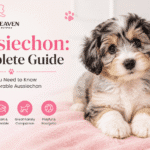
You’ve stumbled onto one of the best-kept secrets in the designer dog world. The Aussiechon doesn’t get the same headlines as the Goldendoodle or the Cavapoo — but the people who own them will tell you flat out: once you live with one, you won’t want anything else.
This is a dog that brings together two completely different personalities — the brilliant, high-energy herding instincts of the Mini Australian Shepherd and the silky, people-loving charm of the Bichon Frise — and somehow the combination produces something perfectly balanced. Smart enough to learn almost anything. Calm enough to curl up on the couch. Gentle enough for kids and seniors. Small enough for an apartment. Fluffy enough to stop strangers in their tracks.
But here’s what nobody else will tell you: this breed isn’t for everyone. And knowing who it is for — and who it isn’t — might be the most useful thing you read today. Let’s get into it.
1. What Is an Aussiechon?
An Aussiechon (also called an Aussie Bichon or Mini Aussie Bichon mix) is a designer crossbreed produced by crossing a purebred Miniature Australian Shepherd with a purebred Bichon Frise. The name is a simple combination of “Aussie” and “Bichon.”
Like most designer breeds, the Aussiechon is not recognized by the American Kennel Club (AKC) as an official breed — because it isn’t a purebred. Both parent breeds are fully AKC-recognized, but the hybrid cross has no formal breed standard. That said, the Aussiechon has earned an incredibly loyal following in the United States over the past two decades, and responsible breeders have developed consistent expectations around size, temperament, and coat type.
What makes this cross so interesting is how different the two parent breeds are on paper — and yet how well the combination works in practice:
| Parent Breed | Background | Key Traits They Pass On |
|---|---|---|
| Mini Australian Shepherd | American herding dog, 1960s development | Intelligence, agility, alertness, problem-solving ability, energy, merle coat patterns, striking eye colors |
| Bichon Frise | Mediterranean/French companion dog, 14th century | Low-shedding curly coat, hypoallergenic qualities, social warmth, gentleness, charm, adaptability |
If you want to see available puppies right now, browse our Aussiechon puppies for sale — all from breeders we’ve personally vetted for health standards and early socialization.
2. The Parent Breeds: Mini Aussie & Bichon Frise
To really understand an Aussiechon, you need to know where each parent came from — because that history is baked into your puppy’s personality, body, and instincts.
The Miniature Australian Shepherd
Despite the name, the Australian Shepherd did not originate in Australia. The breed developed in the western United States during the 1800s, likely from Pyrenean Shepherd dogs brought over via Australia during the Gold Rush era — which is how the “Australian” name stuck. They became beloved working dogs on American ranches and farms, famous for their ability to herd livestock intelligently and independently.
In the 1960s, breeders began selectively breeding down in size to create the Miniature Australian Shepherd — a dog with all the Aussie’s legendary intelligence and athleticism in a smaller, more manageable frame. The Mini Aussie typically weighs 20–40 pounds and stands 13–18 inches tall. They are renowned as one of the most trainable dogs on earth, capable of mastering complex commands, agility courses, and even emotional support work.
The Mini Aussie is also the source of the Aussiechon’s most distinctive visual trait: the merle coat pattern and the possibility of striking blue or heterochromatic (two different color) eyes. These eye-catching traits come entirely from the Australian Shepherd lineage.
The Bichon Frise
The Bichon Frise has a history that stretches back to 14th century Tenerife in the Canary Islands. They were traded by Spanish sailors and quickly became prized companion dogs across Europe — living in the courts of Spanish, Italian, and French royalty. French King Henry III was famously devoted to his Bichons. The breed received its official French name “Bichon à Poil Frisé” (Bichon with curly hair) in 1933.
What makes the Bichon Frise so valuable as a breeding parent is their coat. That dense, curly, white coat sheds minimally — and while no dog is truly hypoallergenic, the Bichon produces far less airborne allergen than most breeds. They also bring centuries of companion-dog breeding to the mix: warmth, sociability, adaptability, and an easy-going nature that makes them perfect apartment dogs and therapy companions.
The Bichon’s cheerful, clown-like personality — they genuinely seem to enjoy making people laugh — also comes through strongly in the Aussiechon.
3. Origin & History of the Aussiechon
The Aussiechon is a modern breed, born from the wave of designer dog breeding that swept America in the 1980s and accelerated through the 1990s and 2000s. The goal was straightforward: combine the Mini Aussie’s extraordinary intelligence with the Bichon Frise’s hypoallergenic coat and gentle companion nature — and produce a small, trainable, low-shedding family dog that worked in any living situation.
The result exceeded expectations. Aussiechons proved to be not just intelligent and low-shedding, but also remarkably versatile — equally at home in a Manhattan apartment or a Texas ranch, equally comfortable with a single owner or a family of six, equally happy on an agility course or curled up on a lap.
The breed remains relatively rare compared to more established doodle hybrids like the Goldendoodle or Cavapoo. That rarity is actually part of the appeal for many owners — the Aussiechon still has the “not everyone has one” quality that makes them a conversation-starter everywhere they go. But their reputation is growing fast, and more families are discovering what Aussiechon owners have known for years.
4. Aussiechon Size, Weight & Growth Chart
The Aussiechon falls in the small-to-medium range — big enough to be sturdy and not fragile, small enough for apartments and easy travel. Here’s what to expect at different life stages:
| Age | Estimated Weight | Estimated Height | Development Milestone |
|---|---|---|---|
| 8 Weeks | 2 – 4 lbs | 4 – 6 inches | Ready for new home; socialization window open |
| 3 Months | 4 – 8 lbs | 6 – 9 inches | Rapid growth; begin basic training |
| 6 Months | 8 – 14 lbs | 9 – 14 inches | Approximately 75% of adult size reached |
| 9 Months | 12 – 18 lbs | 10 – 17 inches | Growth slowing; approaching adult height |
| 12 Months | 14 – 19 lbs | 10 – 18 inches | Most Aussiechons fully grown in height |
| 15 – 18 Months | 8 – 20 lbs (adult) | 10 – 18 inches (adult) | Final adult size — some fill out until 18 months |
The wide weight range (8–20 lbs) reflects the natural variation in this cross. A puppy that takes more after its Bichon Frise parent will run smaller. One that leans toward the Mini Aussie side may reach closer to 20 pounds. The best indicator of your Aussiechon’s likely adult size is the documented weight of both parents — always ask your breeder for this information before purchasing.
Aussiechon vs. Similar Breeds — Size Comparison
| Breed | Adult Weight | Energy Level | Shedding |
|---|---|---|---|
| Aussiechon | 8 – 20 lbs | Moderate | Minimal |
| Cavachon | 10 – 18 lbs | Low-Moderate | Low |
| Mini Aussiedoodle | 10 – 30 lbs | High | Minimal |
| Mini Havapoo | 10 – 20 lbs | Moderate | Minimal |
| Bichon Frise (purebred) | 12 – 18 lbs | Moderate | Minimal |
Want to see how the Aussiechon stacks up against similar breeds in detail? Our guide to the best small dog breeds for families compares the Aussiechon, Cavachon, Mini Aussiedoodle, and several others side by side.
5. Aussiechon Appearance: Coat, Colors & Physical Features
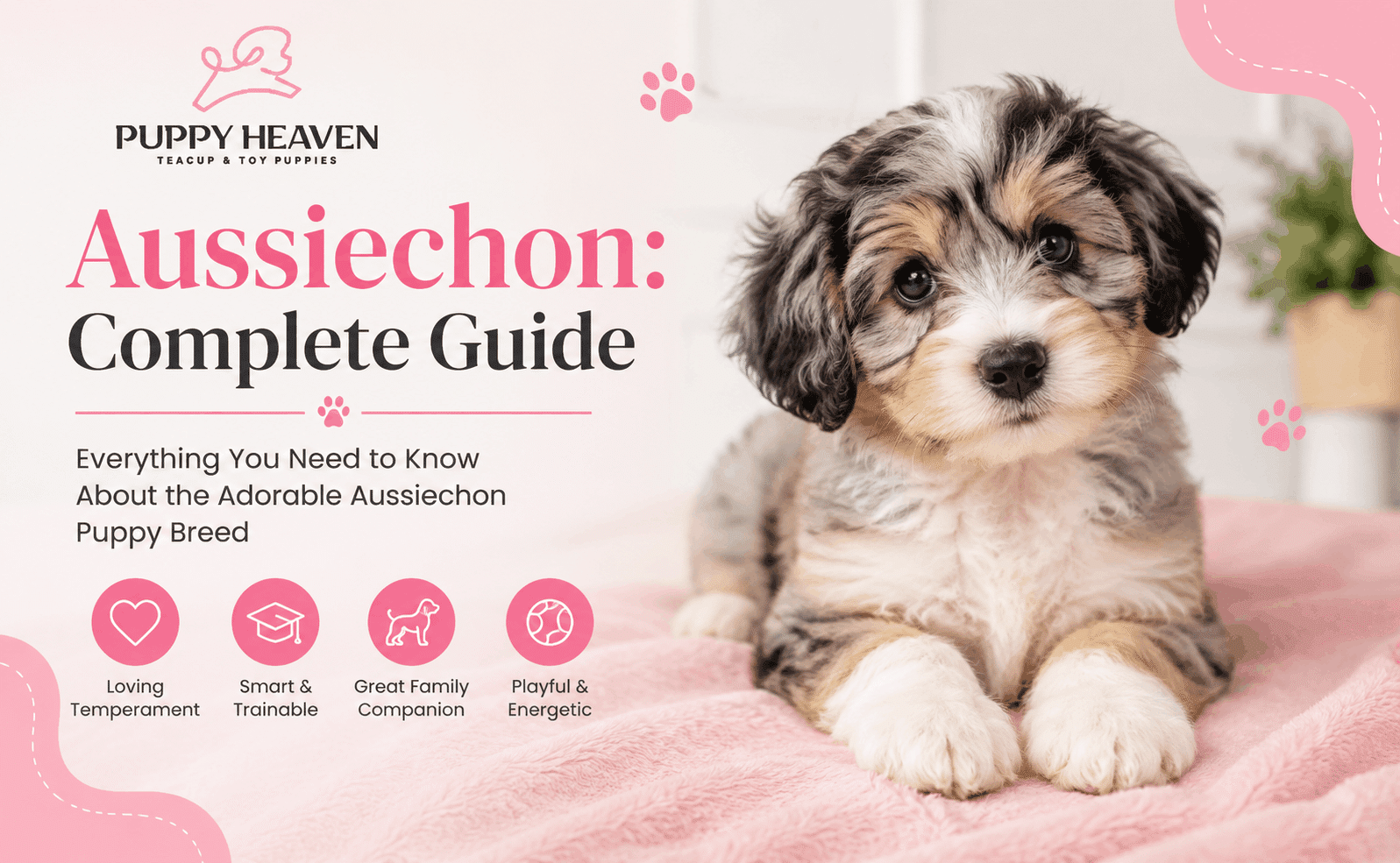
The Aussiechon is — and there’s no other word for it — stunning. They combine the fluffy, cloud-like softness of the Bichon Frise with the bold, striking color patterns of the Mini Australian Shepherd. The result is a dog that genuinely stops people in their tracks.
Physical Features
- Head: Rounded, medium-sized, well-proportioned to the body
- Eyes: Almond-shaped and highly expressive — can be dark brown, amber, or the striking blue inherited from the Mini Aussie. Some Aussiechons have heterochromia — one brown eye and one blue — which is one of the most visually unique traits in any breed.
- Nose: Small black or liver-colored button nose
- Ears: Can be either floppy (Bichon influence) or semi-erect (Aussie influence). Some Aussiechons have ears that fall somewhere in between — folding partway and then lifting at the tips. Each dog is slightly unique.
- Body: Compact and well-muscled — more athletic than a typical Bichon, more refined than a typical Aussie. They look sturdy but move lightly.
- Tail: Medium length, carried either straight or with a slight curl depending on which parent dominates
Coat Types
The Aussiechon coat varies between puppies — even within the same litter — depending on which parent’s genes are more dominant:
- Soft and Wavy (most common): The blend of Bichon curl and Aussie texture usually produces a soft, wavy, medium-length coat. This is the “classic” Aussiechon look. Low to minimal shedding. Needs brushing 3–4 times a week.
- Curly (Bichon-dominant): Tighter curls, very low shedding, more hypoallergenic qualities. Requires more consistent brushing as tangles form faster in the curls.
- Straight/Flat (Aussie-dominant): Less common in well-bred Aussiechons. More shedding than the wavy or curly types. Still manageable but less allergy-friendly.
Colors — Where the Aussiechon Gets Really Exciting
The Mini Australian Shepherd brings an extraordinary range of colors and patterns to the mix. Aussiechon coats can include:
- 🔵 Blue Merle — Mottled gray-blue with black patches; often paired with blue eyes. One of the most sought-after Aussiechon patterns.
- 🔴 Red Merle — Mottled red-brown and cream; can also produce blue or amber eyes.
- ⚫ Black & White — Clean, crisp contrast; often with tan points above the eyes and on the chest.
- 🤎 Red / Red Tricolor — Warm auburn-brown base with white and tan markings.
- 🤍 White / Cream (Bichon influence) — Pure or near-pure white, fluffy and cloud-like.
- 🎨 Parti-Color — Two or more distinct colors in patches; very common in Aussiechons.
- 🩶 Gray / Silver — Lighter diluted versions of standard colors, particularly striking in adults.
6. Aussiechon Temperament & Personality
Ask anyone who owns an Aussiechon what they’re like, and watch their face change. There’s a particular expression that comes over people when they describe this breed — somewhere between pride and amusement — because the Aussiechon’s personality is genuinely difficult to overstate.
This is a dog that is switched on. They notice everything. They remember things. They figure things out. And they do all of it with a warmth and enthusiasm that makes you want to spend more time with them, not less.
Core Personality Traits
- ✅ Highly intelligent — The Mini Aussie is one of the most intelligent dogs on earth. That brain comes through clearly in the Aussiechon. They learn fast, remember commands reliably, and solve problems independently in ways that will surprise you.
- ✅ Deeply affectionate — From the Bichon Frise side comes centuries of companion-dog breeding. Aussiechons bond intensely with their families. They are not standoffish or independent — they want to be near you.
- ✅ Playful and entertaining — They have a natural showmanship about them. They love learning tricks and performing them. They will make you laugh every single day.
- ✅ Alert and watchful — The Aussie herding instinct gives the Aussiechon a natural awareness of their environment. They make excellent watchdogs — not aggressive, but they will absolutely let you know when something is happening.
- ✅ Socially confident — When properly socialized early, Aussiechons greet strangers and new dogs with curiosity rather than fear or aggression. They love dog parks and thrive in social situations.
- ✅ Adaptable — Can match your energy. Active day planned? They’re in. Quiet Sunday at home? Also in. This adaptability is one of the most practical traits they have for modern family life.
- ✅ Non-aggressive — Aussiechons rarely snap, growl, or resource-guard when properly raised. They are genuinely gentle dogs.
- ⚠️ Can develop separation anxiety — Their deep bonds with their owners mean being left alone for long stretches is genuinely hard for them. This needs to be addressed through training from puppyhood — not ignored.
The Herding Instinct — What You Need to Know
The Mini Australian Shepherd was bred to herd livestock — and that instinct doesn’t disappear in a hybrid cross. Many Aussiechons will attempt to “herd” small children, other pets, or even adults by nudging them, circling them, or gently nipping at heels. This behavior is completely natural and not aggressive — but it does need to be redirected with consistent training, especially in homes with young children. Early training to channel that intelligence and energy constructively makes this a non-issue for most families.
Looking for a deeper comparison between the Aussiechon and similar breeds? Our Mini Aussiedoodle guide and Cavachon guide will help you understand where the Aussiechon sits in the spectrum of small intelligent dogs.
7. Aussiechon Health: Conditions, Risks & Prevention
The Aussiechon benefits from what geneticists call hybrid vigor — the advantage crossbred dogs often have over purebreds because they draw from a more diverse gene pool. In practice, this means Aussiechons are often healthier, live longer, and suffer fewer hereditary diseases than either parent breed alone.
But hybrid vigor is not a health guarantee. Aussiechons can still inherit health conditions from either parent, and responsible ownership means knowing what to watch for and acting early when symptoms appear.
7.1 Hip Dysplasia
Inherited primarily from the Mini Australian Shepherd side. The hip joint develops abnormally, causing the ball and socket to grind rather than move smoothly. Over time this leads to arthritis, pain, and reduced mobility. Symptoms include reluctance to exercise, a “bunny hop” gait when running, stiffness after rest, and difficulty rising. Responsible breeders OFA-certify the hips of both parent dogs. Ask to see these certificates before buying. Weight management and joint supplements (glucosamine, fish oil) are front-line prevention throughout life.
7.2 Patellar Luxation
The kneecap slips out of its normal groove — a common issue in small to medium breeds. You may notice your dog intermittently picking up a rear leg mid-walk, then putting it down again as the patella relocates. Mild cases are managed conservatively. Severe or recurring cases require surgical correction ($1,500–$4,000 per knee). Reputable breeders test parent dogs for patellar grading through OFA. This is one of the most important health tests to verify before purchasing.
7.3 Eye Conditions (MDR1 / Collie Eye Anomaly)
The Australian Shepherd line carries a known genetic mutation called MDR1 (also called the ABCB1 mutation). This mutation affects how the dog processes certain drugs — making some common medications (ivermectin, certain sedatives, anti-nausea drugs) potentially toxic at normal doses. This is critically important information for any veterinarian treating your Aussiechon. Always inform your vet of the Aussie parent heritage so they can check the MDR1 status and adjust drug protocols accordingly. DNA testing for MDR1 is available and strongly recommended.
Additionally, the Australian Shepherd line can carry Collie Eye Anomaly (CEA) — a hereditary condition affecting the retina, choroid, and optic disc. Severity ranges from mild to severe vision impairment. CAER eye exams on parent dogs can detect carrier status. Always ask your breeder if the Aussie parent has been CAER-certified.
7.4 Cataracts
Both the Bichon Frise and the Australian Shepherd can develop hereditary cataracts — clouding of the lens that progresses to vision loss. Signs include a cloudy or bluish appearance to the eye, bumping into objects, and increasing hesitancy in low light. Annual eye exams help detect early changes. Surgical treatment is available and often successful when caught early.
7.5 Allergies
Some Aussiechons inherit skin or food sensitivities, particularly from the Bichon Frise side. The Bichon is known for environmental allergies (pollen, dust mites, grass) that manifest as skin irritation, itching, hot spots, or chronic ear inflammation. Food sensitivities to chicken, beef, or grains can also occur. If your Aussiechon scratches constantly, chews its paws, or has recurring ear infections, consult a veterinary dermatologist for allergy testing.
7.6 Dental Disease
Small and medium breeds are significantly more prone to early dental disease than large breeds because their teeth are more crowded relative to jaw size. Aussiechons that don’t receive regular dental care can develop painful gum disease, tooth loss, and systemic inflammation as mouth bacteria enter the bloodstream. Daily tooth brushing (dog-safe toothpaste only) and professional dental cleanings every 12–18 months are not optional for long-term health — they are genuinely life-extending habits.
7.7 Epilepsy
The Australian Shepherd has a higher-than-average incidence of idiopathic epilepsy (seizures with no identifiable cause). This can pass to Aussiechon offspring. If your dog has a seizure, get to a vet immediately — many epileptic dogs live full, normal lives on appropriate medication, but the condition needs proper diagnosis and management. This is another reason why knowing the full health history of both parents matters enormously.
Before purchasing, verify: OFA hip & patella certifications for both parents | CAER eye exam clearance | MDR1 DNA test for the Aussie parent | Written health guarantee of minimum 2 years | Breeder’s take-back policy if health issues arise | Pet insurance started before first vet visit (to avoid pre-existing condition exclusions)
For more detail on managing health in designer breeds, visit our small breed health guide — written with veterinary input and covering prevention, symptoms, and treatment for the most common conditions.
8. Aussiechon Lifespan
The average Aussiechon lifespan is 12–15 years. Well-cared-for individuals regularly live to 14–16 years, and some exceed that. The Mini Australian Shepherd averages 13–15 years. The Bichon Frise averages 14–16 years (the oldest known Bichon Frise reportedly lived to 21). The Aussiechon inherits this longevity potential from both sides.
The biggest factors that determine whether your Aussiechon lives 11 years or 16 years:
- Dental hygiene — Periodontal disease is the single most preventable health problem shortening the lives of small and medium dogs. Brush daily. It matters more than almost anything else.
- Weight management — An Aussiechon carrying 3–4 extra pounds (20–25% above ideal weight) is stressing joints, heart, and organs. Keep them lean.
- Regular veterinary care — Annual wellness exams (twice yearly after age 8) catch conditions while they’re still manageable
- Mental stimulation — A mentally active, engaged dog is a healthier dog. This is particularly true for intelligent breeds like the Aussiechon.
- Genetics from health-tested parents — The breeder’s work before you ever meet the puppy has already determined a significant portion of their health trajectory
9. Complete Aussiechon Care Guide
Living Environment
One of the genuine strengths of the Aussiechon is how adaptable they are to different living situations. City apartment with no yard? Works perfectly — as long as they get daily walks and mental engagement. Suburban home with a fenced yard? Even better. Rural property? They’ll love it. The key variable is not space — it’s time with their people. An Aussiechon in a large house with owners who are rarely home will be unhappier than an Aussiechon in a small apartment with an owner who works from home.
The Socialization Window — Don’t Miss It
Between 3 and 16 weeks of age, a puppy’s brain is forming its foundational understanding of what is safe and normal in the world. Experiences during this window shape temperament for life more than almost anything that happens afterwards. An Aussiechon properly exposed to different people, sounds, surfaces, children, animals, and environments during this period grows into a confident, unflappable adult. One that misses this window can develop anxiety, reactivity, or fear responses that require significant behavioral work to address.
The good news: Aussiechons are naturally confident and curious. They’re not shrinking violets. But the socialization window must still be used intentionally. Our puppy socialization guide gives you a week-by-week exposure plan to follow from day one.
Veterinary Care Schedule
- 8 weeks: First puppy exam, deworming, begin DHPP vaccine series
- 12 weeks: Second DHPP booster, Bordetella if needed
- 16 weeks: Third DHPP booster, Rabies vaccine
- 6 months: Spay or neuter discussion with vet (most recommend 6–12 months)
- Annual: Wellness exam, heartworm test, fecal test, core vaccine boosters as needed
- Monthly: Heartworm, flea, and tick prevention — year-round in most climates
- Every 12–18 months: Professional dental cleaning under anesthesia
Preventing Separation Anxiety
This is the most important behavioral challenge to address from day one. Start with 5-minute absences the very first week, gradually building to longer periods over weeks and months. Never make departures or arrivals emotional events — leave calmly, return calmly. Crate training done correctly gives your Aussiechon a safe, defined space when you’re away. Puzzle toys, frozen Kongs, and calming aids (Adaptil diffusers, calming chews) help during longer absences. Our new puppy checklist includes a complete separation anxiety prevention protocol starting from week one at home.
10. Feeding an Aussiechon
Meal Frequency by Age
| Age | Meals Per Day | Notes |
|---|---|---|
| 8–12 Weeks | 4 meals daily | Supports rapid growth; prevents low blood sugar in smaller puppies |
| 3–6 Months | 3 meals daily | Transition as puppy’s capacity increases |
| 6–12 Months | 2–3 meals daily | Moving toward adult routine |
| Adult (1 year+) | 2 meals daily | Morning and evening; consistent timing aids digestion and routine |
What to Feed
Choose a high-quality small or medium breed dry kibble with real meat as the first listed ingredient — chicken, turkey, lamb, salmon, or beef. Avoid formulas where the top ingredients are corn, wheat, soy, or unnamed animal byproducts. Look for added glucosamine for joint support, omega-3 fatty acids for coat health, and probiotics for digestive health.
A small amount of wet food mixed in improves both palatability and hydration. Fresh food toppers (cooked chicken, plain sweet potato, blueberries) can add variety and nutritional density — always in moderation and checked against our dog-safe food guide first.
Foods to never feed an Aussiechon: grapes, raisins, onions, garlic, chocolate, xylitol (in sugar-free gums, peanut butters, and many snacks), macadamia nuts, avocado, raw bread dough, and cooked bones.
Portion Guidance
A healthy adult Aussiechon needs approximately 30–40 calories per pound of body weight per day. A 15-pound moderately active Aussiechon needs roughly 450–600 calories daily. Always follow the specific feeding guidelines on your chosen food and adjust based on body condition — you should be able to feel the ribs with light pressure but not see them. Treats should account for no more than 10% of daily calories.
11. Aussiechon Grooming Requirements
Let’s set expectations clearly: the Aussiechon’s coat is gorgeous and low-shedding — but it does not maintain itself. The same quality that makes it shed-resistant (the coat holds loose hair in rather than releasing it) also means that hair tangles and mats if not regularly worked through. Grooming is not an occasional chore — it’s a regular routine.
Brushing
Brush your Aussiechon at least 3–4 times per week, daily if they have a curlier coat. Use a slicker brush across the coat surface and follow up with a metal greyhound comb to detect tangles underneath. Mat-prone areas: behind the ears, under the armpits, around the collar, base of the tail, and between the toes. Always brush from the skin outward, working in sections. If you hit a tangle, work from the tip inward in small steps — never pull through it.
Get your Aussiechon used to brushing from week one at home. A dog that learns to enjoy being brushed as a puppy is infinitely easier to groom as an adult than one that was never handled this way early on.
Professional Grooming
Schedule professional grooming every 6–10 weeks. A full groom includes bath, blow-dry, haircut, nail trim, ear cleaning, and sanitary area trim. Popular styles for Aussiechons include:
- Teddy Bear Cut — Short, rounded, fluffy all over. Shows off the face beautifully. Easy to maintain between professional visits. Most popular for Aussiechons.
- Puppy Cut — Uniform short length all over the body. Very practical and clean-looking.
- Natural/Show Cut — Full length coat, beautifully flowing. Stunning but requires daily brushing commitment without exception.
- Summer Cut — Very short clip for warm climates. Easiest maintenance of all options.
Bathing
Bathe every 3–5 weeks using a dog-formulated shampoo and a moisturizing conditioner. Human shampoos have wrong pH for dog skin. Dry thoroughly after every bath — especially inside those floppy ears, where moisture plus warmth creates the perfect environment for yeast and bacterial infections.
Ear Care
Check ears weekly. Clean with a vet-approved ear cleanser on a cotton ball — never insert anything into the ear canal itself. Some Aussiechons grow hair inside the ear canal that needs periodic plucking or trimming by your groomer to prevent debris buildup. Signs of infection: dark discharge, foul odor, redness, frequent head shaking, or pawing at the ear. Treat ear infections promptly — they escalate quickly and become very painful.
Nail Care & Dental Hygiene
Trim nails every 3–4 weeks — if you hear clicking on hardwood floors, they’re overdue. Brush teeth 3–7 times per week with dog-specific toothpaste (never human toothpaste — xylitol is toxic). This single habit is more impactful on your dog’s long-term health than most owners realize. Explore our small breed grooming guide for detailed how-to instructions, tool recommendations, and tips for making grooming a positive experience from day one.
12. Training Your Aussiechon
Training an Aussiechon is one of the genuine pleasures of owning this breed. That Mini Aussie intelligence means they pick up commands quickly — sometimes alarmingly quickly. Most Aussiechon owners report their dogs learning new commands in just 3–5 repetitions. That same intelligence, however, means a bored or under-stimulated Aussiechon will find ways to entertain themselves — and those ways won’t always be things you approve of.
The One Rule That Matters Most
Positive reinforcement only. Aussiechons have a sensitive streak — they respond to tone of voice, body language, and the emotional temperature of their environment. Harsh corrections or punishment-based training backfire badly with this breed: they become anxious, withdrawn, or start avoiding training situations entirely. Reward-based training — small treats, enthusiastic praise, play as a reward — is dramatically more effective and builds genuine trust at the same time.
Potty Training
Consistent, schedule-based potty training works best. Take your puppy out every 1–2 hours during the day, immediately after every meal, every nap, and every play session. Use a specific command word every time (“go potty” works well) and praise the moment they finish outside. Never punish accidents — simply clean up with an enzymatic cleaner (to eliminate the scent signal) and resolve to be more vigilant. Most Aussiechon puppies are reliably house-trained within 6–10 weeks of consistent effort. Our new puppy checklist includes a complete potty training protocol week by week.
Mental Challenge is as Important as Obedience
Because of the Aussie intelligence, the Aussiechon needs to think as much as it needs to move. Incorporate puzzle feeders, nose work (hiding treats around the house for the dog to find), trick training, and interactive games into the daily routine. A 10-minute training session where the dog has to really work and concentrate will settle them down more effectively than a 30-minute walk where their brain is idle. This is a genuinely smart dog — use that intelligence, don’t fight it.
Agility and Canine Sports
If you have the time and interest, the Aussiechon is a naturally gifted agility dog. The Mini Aussie is one of the dominant breeds in agility competitions, and that athleticism and drive to work comes through in the hybrid. Even basic backyard agility — weave poles, a simple tunnel, a small jump — gives this dog a focused, purposeful outlet that makes them measurably calmer and happier at home.
13. Aussiechon Exercise Needs
The Aussiechon lands in the “moderate” energy category — which in practice means they’re active and engaged when you engage them, and they settle comfortably when you’re ready to relax. They are not high-maintenance exercise dogs. But they do need daily movement and mental engagement, and a dog that doesn’t get it will tell you about it through behavior.
| Activity Type | Daily Recommendation | Notes |
|---|---|---|
| Walks | 2 walks, 20–30 min each | Allow sniffing — it provides rich mental stimulation alongside physical exercise |
| Active Play | 15–20 minutes | Fetch, tug, chase, frisbee — they love games that involve speed and skill |
| Mental Exercise | 5–15 minutes training or puzzle work | Critically important for the Aussie brain — not optional for this breed |
| Total Daily Activity | 45–75 minutes | Split across the day, not all at once |
Weather considerations: the Aussiechon’s coat offers some insulation in cold weather, but they’re not built for extreme cold. In hot weather, exercise in the early morning or evening when temperatures are lower, always provide water and shade, and watch for signs of overheating: heavy panting, drooling, lethargy, or stumbling.
14. Aussiechon with Kids, Seniors & Other Pets
With Children
Aussiechons are gentle, playful, and patient — genuinely good family dogs. They love the energy and unpredictability that children bring. They’ll chase a ball, play keep-away, and then happily curl up for story time. The herding instinct occasionally surfaces around very young children — circling or gentle nipping at heels — which is not aggressive but does need to be addressed through redirection and training. With children over age 6, the Aussiechon is typically an excellent, low-concern companion.
With Seniors
The Aussiechon’s moderate energy level and adaptability make them a wonderful choice for older adults. They’re not demanding 90-minute runs every day. Two moderate walks and some indoor play is plenty. Their affectionate, intuitive nature — that sensitivity to human emotion inherited from both parent breeds — makes them exceptional emotional companions for seniors living alone. They give purpose to a daily routine and are small enough to manage physically without difficulty.
With Other Dogs
Well-socialized Aussiechons are typically excellent with other dogs. They’re playful and social without being dominant or aggressive. Early introductions should be done on neutral ground, calmly and with no forced interaction — let both dogs approach on their own terms. The herding instinct may show up with smaller dogs in the form of circling or mild chasing, which is instinct rather than aggression and fades with consistent redirection.
With Cats & Small Pets
With proper introduction, most Aussiechons live happily alongside cats. The key is a slow, managed introduction with the cat always having safe escape routes and high spaces. The prey and herding drives from the Aussie side mean some Aussiechons will chase small animals — guinea pigs, birds, hamsters — and should not be left unsupervised with them. This varies significantly between individuals.
15. How Much Does an Aussiechon Cost?
The Aussiechon is a specialty designer breed — not mass-produced, not widely available, and priced to reflect the genuine cost of responsible breeding. Here’s an honest, full picture of what you should expect to spend:
| Cost Item | Estimated Range | Notes |
|---|---|---|
| Purchase Price | $1,000 – $3,000 | Merle and blue-eyed puppies often at top of range; location also affects price |
| Initial Vet Visit & Vaccines | $300 – $600 | Full puppy exam, deworming, remaining vaccine series |
| Spay / Neuter | $200 – $500 | Varies by clinic and region; low-cost options often available |
| Annual Vet Care | $400 – $1,500/year | Increases after age 7; higher if any health conditions develop |
| Professional Grooming | $55 – $100 per visit | Every 6–10 weeks = $300–$800/year depending on frequency |
| Food | $35 – $70/month | Premium small/medium breed kibble; less than large breed ownership |
| Pet Insurance | $35 – $75/month | Get a plan covering hereditary conditions; start before first vet visit |
| Heartworm/Flea/Tick Prevention | $100 – $200/year | Non-negotiable in most U.S. climates |
| Supplies (one-time setup) | $250 – $500 | Crate, bed, leash, harness, collar, grooming tools, food bowls, toys |
Over a 13-year lifespan, realistic total ownership cost for an Aussiechon runs $20,000–$45,000 depending on region, healthcare needs, and lifestyle. This is not a budget pet — but compared to many similarly sized designer breeds, the Aussiechon sits toward the middle of the price spectrum while offering exceptional intelligence and temperament.
16. How to Find a Responsible Aussiechon Breeder
This step matters more than any other decision in this entire guide. The breeder you choose has already made decisions — before you ever see the puppy — that will determine its health, temperament, and quality of life. Here’s what separates a responsible breeder from the rest:
- ✅ MDR1 DNA test for the Mini Aussie parent — Non-negotiable. This tells your vet which drugs are dangerous for your dog. Ask to see the certificate.
- ✅ OFA hip, elbow, and patella certifications — Both parents should be tested and listed on OFA’s publicly searchable database.
- ✅ CAER eye exam results — Important given the Aussie’s known eye condition risks.
- ✅ Single merle parent only — If you’re buying a merle Aussiechon, confirm that only one parent carries merle. Two merle parents = serious genetic defect risk. This is a non-negotiable ethical standard.
- ✅ In-person visits welcomed — You should be able to visit and see how the puppies live. Video calls are an acceptable secondary option for long-distance, but in-person is always better.
- ✅ They screen you — A good breeder asks about your lifestyle, home, experience with dogs, and what you’re looking for. This isn’t nosiness — it’s how responsible breeders protect their puppies’ futures.
- ✅ Early socialization documented — Ask what socialization protocols were used. Were puppies handled daily? Exposed to sounds, surfaces, people? The best breeders use structured early socialization programs (like Puppy Culture or Avidog) from birth.
- ✅ Written health guarantee of 2+ years — Against hereditary conditions. Clear terms, no loopholes.
- ✅ Support after the sale — The best breeders stay available for the life of the dog — not just the day you pick up the puppy.
Browse our directory of personally vetted Aussiechon breeders at PuppyHeaven — each one has been reviewed against our health, ethics, and transparency standards before we list them.
17. Red Flags to Avoid When Buying an Aussiechon
- 🚩 Puppies released before 8 weeks of age — illegal in most states, harmful to development
- 🚩 No MDR1 testing for the Aussie parent — this is a serious gap that will directly affect veterinary care
- 🚩 Two merle parents bred together — an irresponsible practice with severe consequences for puppies
- 🚩 No OFA health certifications for parents — this is the baseline standard for ethical breeding
- 🚩 Refusal or discouragement of in-person visits
- 🚩 Always has puppies available in multiple litters — sign of a commercial mill operation
- 🚩 Payment by wire transfer, Zelle, or Venmo only, with no written contract
- 🚩 The breeder asks nothing about your home, lifestyle, or experience
- 🚩 Puppies appear thin, lethargic, or have discharge from eyes or nose
- 🚩 Price is significantly below market average with no explanation
For a complete guide to safely navigating the puppy buying process, read our how to find a reputable dog breeder guide — covers everything from initial contact to picking up your puppy safely.
18. Is an Aussiechon Right for You?
| ✅ Aussiechon Is a Great Fit If You… | ❌ May Not Be the Right Fit If You… |
|---|---|
| Want a genuinely intelligent, trainable dog | Work very long hours away from home with no care plan |
| Live in an apartment, condo, or smaller home | Want a dog that requires minimal mental engagement |
| Want a low-shedding, allergy-friendlier coat | Are not prepared for regular grooming commitment |
| Are a first-time dog owner who will commit to training | Have very young toddlers and cannot supervise interactions closely |
| Want a dog that’s equally good for play and cuddling | Have a strict limited budget for ongoing pet care costs |
| Are a senior or single person wanting deep companionship | Want a laid-back dog with very low exercise needs |
| Want a dog that’s great with kids, other pets, and visitors | Frequently travel without the ability to bring your dog |
| Enjoy an active lifestyle but want a dog that also settles | Have a home full of small animals that could trigger prey instincts |
🐾 Ready to Find Your Aussiechon?
At PuppyHeaven, every Aussiechon puppy comes from a breeder we’ve vetted personally for health testing standards, ethical practices, and early socialization quality. No puppy mills. No compromises. Just healthy, well-raised puppies ready to become part of your family.
19. Frequently Asked Questions About Aussiechons
Final Thoughts: The Aussiechon Is One of the Best-Kept Secrets in the Designer Dog World
The Aussiechon doesn’t have the brand recognition of a Goldendoodle or a Cavapoo. It doesn’t show up in every Instagram feed. It doesn’t get the celebrity endorsement. And none of that matters — because the people who own Aussiechons already know what they have.
They have a dog that learns faster than almost any other small breed. A dog that bonds with its family with a depth that surprises first-time owners. A dog that can work a crowd at a dog park, then spend a quiet evening in your lap. A dog with a coat that turns heads and a personality that keeps people talking.
But they’re not perfect for everyone. The intelligence that makes them so rewarding to train also makes them demanding to stimulate. The bonds they form also mean they struggle when left alone too long. The coat that’s so beautiful needs real, consistent grooming. And the health testing that matters so much means you cannot cut corners on the breeder you choose.
Go in with full information. Choose the right breeder. Invest in early training and socialization. And if you do all of that — the Aussiechon will reward you for 12 to 15 years with a level of companionship that most dog owners only read about.
Ready to find yours? Browse our hand-selected available Aussiechon puppies at PuppyHeaven and explore our full library of breed guides and new owner resources. We’re with you every step of the way.
🐾 Find Your Perfect Aussiechon at PuppyHeaven
Healthy puppies. Verified breeders. Honest information. That’s the PuppyHeaven standard — every single time.