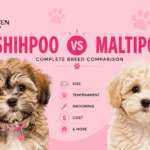
Both dogs are small. Both are affectionate. Both have those soft, flowing coats and the kind of expressive eyes that make it hard to say no to anything. So why does the choice between a Shih Tzu and a Maltipoo feel so difficult?
Because they are not the same dog. They look similar in photos and share some core qualities — but their temperaments, health profiles, grooming demands, trainability, allergy friendliness, and lifespans diverge in ways that genuinely matter when you’re picking a companion for the next 12–16 years.
This guide gives you the complete picture with honest depth — from breed origins and full-size data to specific health conditions with cost context, training realities, grooming cost breakdowns, and a comprehensive decision framework that tells you exactly which breed fits which household. By the end, you’ll know which one is right for you — and why.
⚡ QUICK VERDICT — WHICH BREED IS RIGHT FOR YOU?
🐕 CHOOSE SHIH TZU IF:
- You want a calm, regal lap companion
- You live in a hot climate (flat face tolerates heat more than you’d expect with proper care)
- You love classic long-flowing silky coats
- You want an AKC-recognized purebred
- You work from home or have company all day
🐕 CHOOSE MALTIPOO IF:
- You or a family member has dog allergies
- You want a sharper, more trainable dog
- You prefer a more energetic, playful companion
- You want the longest possible lifespan
- You’re a first-time owner wanting an easier training experience
Origins and History: Where Each Breed Comes From
🏭 Shih Tzu — Ancient Imperial China
The Shih Tzu is an Imperial Chinese breed with roots stretching back over a thousand years. The breed was developed by palace breeders from Tibetan stock — most likely a cross between the Pekingese and the Lhasa Apso — and kept exclusively within Chinese royal courts for centuries.
The name “Shih Tzu” translates to “lion dog” in Mandarin — not because they resembled lions in build, but because their flowing mane-like coat was thought to evoke the appearance of lions in traditional Chinese artwork. Chinese emperors valued these dogs so highly that for many years, outsiders were forbidden from owning them.
The breed was nearly wiped out during the Communist Revolution in China. The Western breeding program that saved the Shih Tzu traces to just 14 dogs. The AKC officially recognized the Shih Tzu in 1969.
🌟 Maltipoo — Modern American Designer Breed
The Maltipoo is a modern hybrid — a cross between a purebred Maltese and a Toy or Miniature Poodle — first intentionally developed in the United States in the early 1990s. The goal was to create the gentlest, most companion-oriented small dog possible, with the added benefit of the Poodle’s low-shedding genetics for allergy-sensitive households.
Both parent breeds bring ancient lineage: the Maltese is one of the oldest lap dog breeds in recorded history, depicted in Egyptian artifacts and Greek art over 3,000 years ago. The Poodle dates back 400+ years as a German water retrieval dog prized for its exceptional intelligence.
The Maltipoo is not recognized by the AKC but is registered by the American Canine Hybrid Club, the Designer Dogs Kennel Club, and the International Designer Canine Registry.
Shih Tzu vs Maltipoo Appearance: How They Actually Look
In photos, a well-groomed Shih Tzu and Maltipoo can look strikingly similar — both have round faces, big eyes, soft coats, and that universally appealing small-dog warmth. In person, the differences are more distinct.
🤔 THE SHIH TZU “PUPPY UGLIES” — SOMETHING MOST GUIDES DON’T MENTION
Between approximately 4 and 9 months, many Shih Tzus go through a coat transition called the “puppy uglies” — where the soft puppy coat sheds out and the adult double coat grows in. During this period, the coat can look patchy, thin, or matted more easily than usual. This is completely normal and temporary. Knowing about it beforehand prevents unnecessary worry. The full adult coat typically develops by 10–12 months.
Shih Tzu vs Maltipoo Temperament: The Real Difference
Both breeds are affectionate, people-oriented, and small enough to live comfortably in most home types. But when you look closer, their personalities diverge in ways that genuinely matter for daily life.
🐕 Shih Tzu Temperament
The Regal Homebody
The Shih Tzu was bred exclusively to be a companion animal — specifically for royalty who spent most of their time indoors. That history shows up every day. Shih Tzus are content, calm, and decidedly unbothered. They don’t need hours of stimulation. They don’t demand constant activity. They want to be near you — ideally on you — and they’re happy to let the world do what it does outside while they remain warm and comfortable.
The Independent Streak
Shih Tzus have a notable stubborn streak — inherited from centuries of doing exactly what they pleased in imperial palaces. They’re not aggressive or difficult, but they can be selective about compliance. They’ll learn commands, and then choose when to use them. This is more of a personality trait than a behavioral problem — understanding it going in makes training far less frustrating.
Social With Everyone
The Shih Tzu is a friendly, open breed that welcomes strangers. Unlike some small breeds that are suspicious of new people or vocal about unfamiliar situations, the Shih Tzu tends to accept newcomers with warmth and curiosity. They are great with other animals and children as well as adults.
🌟 Maltipoo Temperament
The Energetic Companion
The Maltipoo is livelier than the Shih Tzu. The Poodle intelligence creates a dog that’s engaged, curious, and motivated — it wants to interact, learn, and play. The Maltese gentleness keeps this energy warm and manageable rather than overwhelming. The result is a dog that’s enthusiastic about life in a way that feels infectious without being exhausting.
Eager to Please
Where the Shih Tzu can be selective about compliance, the Maltipoo genuinely wants to do what you ask. This eagerness-to-please quality — inherited from the Poodle — makes training sessions feel collaborative rather than combative. They pick up commands quickly and maintain them reliably because doing so gets a reaction from their person, which is exactly what they want.
The Clown Personality
Maltipoos have a distinctive sense of humor. They do things that make you laugh on purpose, play with dramatic enthusiasm, and have opinions about everything that they express through a range of vocalizations and body language. If you want a dog that entertains you as much as it comforts you, the Maltipoo wins this category.
Temperament Face-Off: Category by Category
| Category | Shih Tzu | Maltipoo | Winner |
|---|---|---|---|
| Affection level | ⭐⭐⭐⭐⭐ | ⭐⭐⭐⭐⭐ | Tie |
| Trainability | ⭐⭐⭐ | ⭐⭐⭐⭐⭑ | Maltipoo |
| Energy level | ⭐⭐⭐ | ⭐⭐⭐⭐ | Depends on lifestyle |
| Good with children | ⭐⭐⭐⭐ | ⭐⭐⭐⭐⭐ | Maltipoo (slightly) |
| Good with strangers | ⭐⭐⭐⭐⭐ | ⭐⭐⭐⭐⭐ | Tie |
| Good with other dogs | ⭐⭐⭐⭐ | ⭐⭐⭐⭐⭐ | Maltipoo |
| Independence (can be alone) | ⭐⭐⭐ | ⭐⭐ | Shih Tzu (slightly) |
| Playfulness | ⭐⭐⭐⭑ | ⭐⭐⭐⭐⭐ | Maltipoo |
| Calm indoor demeanor | ⭐⭐⭐⭐⭐ | ⭐⭐⭐⭑ | Shih Tzu |
Shih Tzu vs Maltipoo Health: The Complete Guide
Health is where the two breeds diverge most significantly — and where most comparison guides are most superficial. Here’s the full picture, including conditions that rarely get mentioned and real cost context.
🐕 Shih Tzu Health Conditions
💨 Brachycephalic Obstructive Airway Syndrome (BOAS) — The Most Critical Shih Tzu Health Issue
The Shih Tzu’s flat face — responsible for much of the breed’s visual appeal — is also responsible for their most serious structural health challenge. The shortened skull means the same amount of soft tissue must fit in a smaller space: a narrow trachea, elongated soft palate, and stenotic nares (narrow nostrils) all combine to restrict airflow.
Practical implications: Shih Tzus cannot tolerate heat or humidity the way other breeds can. They must never be left in a hot car, even for minutes. They should not be over-exercised in warm weather. Snoring, snorting, and breathing sounds during rest are characteristic of the breed — mild cases are managed through lifestyle; severe cases require surgical correction.
Surgical correction costs: $1,500–$4,000 for soft palate resection and nares widening in severe cases.
👁️ Eye Problems (Dry Eye, Corneal Ulcers, Entropion)
The large, prominent eyes of the Shih Tzu — one of the breed’s most characteristic features — are also their most vulnerable. Dry eye (keratoconjunctivitis sicca) is common because the flat face limits how completely the eyelids can close. Corneal ulcers can result from minor trauma or inadequate tear production. Entropion (inward-rolling eyelids) can cause chronic irritation.
Signs: Excessive tearing, eye discharge, squinting, rubbing face on surfaces, cloudiness. Treatment costs: Daily eye drops for dry eye ($20–$40/month ongoing); corneal ulcer treatment $300–$1,200; surgical entropion correction $800–$2,000.
🧋 Renal Dysplasia (Kidney Disease Specific to Shih Tzu)
A hereditary condition specific to the Shih Tzu breed where the kidneys develop abnormally — failing to mature properly and leading to progressive kidney failure, often presenting in young dogs (under 3 years). This is one of the most serious genetic conditions in the breed and one of the most commonly skipped in buying guides.
Signs: Excessive thirst and urination, weight loss, vomiting, lethargy, poor appetite in young dogs. Prevention: No genetic test is currently widely available. Annual bloodwork from age 1 onward catches early kidney function decline. Ask breeders specifically about family kidney history.
🦀 Hip Dysplasia and Patellar Luxation
Both are common in small breeds. Hip dysplasia involves abnormal joint development; patellar luxation involves a dislocating kneecap producing an intermittent skipping gait. Shih Tzus are particularly compact in build, and excess weight significantly accelerates these conditions.
Treatment costs: Patellar luxation surgery $1,500–$3,000 per knee. Hip dysplasia management $500–$4,500 depending on severity.
🦷 Dental Disease (Small Breed Structural Issue)
The Shih Tzu’s compact jaw means teeth are crowded together, trapping plaque and accelerating gum disease. Daily tooth brushing from puppyhood is the most impactful preventive measure. Professional dental cleanings every 1–2 years are typically necessary. Lifespan impact: Untreated dental disease in small dogs significantly affects quality of life and systemic health.
🌟 Maltipoo Health Conditions
🦓 White Shaker Dog Syndrome — A Condition Most Guides Completely Skip
White Shaker Dog Syndrome is a neurological condition causing generalized body tremors, primarily in small white or light-colored dogs — including Maltese-derived breeds like the Maltipoo. The cause is believed to be autoimmune-related inflammation of the cerebellum. Onset is typically between 6 months and 3 years of age.
Signs: Full-body shaking, trembling, difficulty walking, head tremors. Episodes can be constant or intermittent.
The good news: Most cases respond well to corticosteroid treatment. Many dogs achieve complete remission. Treatment costs: $300–$800 for diagnosis and initial treatment; ongoing management varies by case.
👁️ Progressive Retinal Atrophy (PRA-prcd)
Inherited from the Poodle parent. Progressive retinal atrophy causes gradual vision loss, first affecting night vision then progressing to complete blindness. The prcd gene mutation is present in significant percentages of Miniature Poodles and Maltese.
Prevention: DNA test available — always require PRA clear status on both parent dogs. Signs: Night blindness, dilated pupils, reluctance to move in dim light.
⚡ Epilepsy
A neurological condition producing seizures, seen in Maltese and Poodle lines. Manageable with daily anticonvulsant medication once diagnosed. Most affected dogs live completely normal quality lives. Signs: Convulsions, jerking movements, loss of consciousness, temporary disorientation after episodes.
🦀 Luxating Patella + Dental Disease
Luxating patella (dislocating kneecap) is common in small breeds including the Maltipoo — presenting as a skipping or bunny-hop gait. Mild cases are monitored; moderate-severe require surgery. Dental disease affects Maltipoos due to their small jaw — daily brushing from puppyhood is essential. Both conditions are manageable with proper preventive care.
Lifespan and Overall Health Comparison
| Health Factor | Shih Tzu | Maltipoo |
|---|---|---|
| Average Lifespan | 10–16 years | 12–16 years |
| Breathing concerns | Yes — BOAS (flat face) | None typically |
| Heat tolerance | Limited — needs careful management | Good — handles moderate heat well |
| Eye vulnerability | High — prominent eyes prone to injury | Moderate — PRA risk from genetics |
| Kidney concerns | Yes — renal dysplasia | Low risk |
| Neurological conditions | Moderate risk | Epilepsy, White Shaker Syndrome |
| Hip/Joint issues | Patellar luxation, hip dysplasia | Patellar luxation, hip dysplasia |
| Overall health rating | Moderate — BOAS is significant | Good — hybrid vigor helps |
✅ PET INSURANCE IS STRONGLY RECOMMENDED FOR BOTH BREEDS
Given the BOAS surgical risk in Shih Tzus ($1,500–$4,000) and the eye, neurological, and joint risks in both breeds, pet insurance at $30–$60/month is genuinely cost-effective from day one. A single surgical procedure without insurance can cost more than two years of premiums combined.
Shih Tzu vs Maltipoo Grooming: Real Commitment Required
Both breeds require significant grooming commitment. Neither is a low-maintenance coat breed. Understanding the difference in what each coat actually needs helps you choose the breed whose grooming requirements fit your lifestyle better.
🐕 Shih Tzu Grooming
Coat Type
Long, straight, silky double coat that grows continuously and drags on the ground in full show coat. Most owners keep their Shih Tzu in a practical “puppy cut” rather than the show coat.
Brushing
Daily brushing is ideal; minimum every other day. The double coat tangles easily and mats quickly if neglected.
Face Care (Unique to Shih Tzu)
The flat face requires daily cleaning of the skin folds around the nose and face to prevent moisture-related skin infections. Eye discharge cleaning daily.
Professional Grooming
Every 6–8 weeks. Cost: $55–$95/session. Annual estimate: $440–$760.
🌟 Maltipoo Grooming
Coat Type
Wavy to curly, soft single-layer coat. Texture varies by generation (F1B produces curlier coats). Curlier coats mat fastest but shed least. Wavy coats are more forgiving.
Brushing
Daily for curly coats; every 2–3 days for wavy. High-mat zones: behind ears, armpits, collar area, elbow joints, base of tail.
Shedding
Very low to none for most Maltipoos — especially F1B and F1BB generations. This is the Maltipoo’s biggest advantage over the Shih Tzu for allergy-sensitive households.
Professional Grooming
Every 6–8 weeks. Cost: $50–$90/session. Annual estimate: $400–$720.
| Grooming Expense | Shih Tzu | Maltipoo |
|---|---|---|
| Professional groom cost | $55–$95/session | $50–$90/session |
| Annual grooming estimate | $440–$760 | $400–$720 |
| At-home brushing frequency | Daily to every 2 days | Daily (curly) / 2–3x week (wavy) |
| Face fold cleaning | Daily — required | Not typically needed |
| Shedding level | Low (double coat, minimal shedding) | Very low to none |
| Allergy-friendly | Moderate (low shedding helps) | Yes — especially F1B/F1BB |
Training: Shih Tzu vs Maltipoo — The Honest Assessment
This is where the two breeds differ most practically for new owners. The difference isn’t dramatic — neither is a difficult dog — but it’s real and consistent.
Shih Tzu Training Reality
Shih Tzus are intelligent dogs — they understand training. What they don’t always do is comply. The independence developed over centuries of palace life means a Shih Tzu may know exactly what “sit” means and decide whether or not to perform it based on factors only they fully understand.
What works: Very short sessions (5–10 minutes), high-value treats, consistent patience, and not taking selective non-compliance personally. The Shih Tzu is not defying you — they’re exercising their historic prerogative as a dog that was bred to be pampered, not to work.
Housetraining: Can be slower than many breeds. Consistent schedule and crate training are the most effective approach. Expect the process to take 3–6 months of consistency.
Maltipoo Training Reality
The Poodle is consistently ranked among the top two most intelligent dog breeds ever assessed. That intelligence, combined with the Maltese eagerness-to-please, makes the Maltipoo one of the more genuinely enjoyable breeds to train. They pick up commands quickly, maintain them reliably, and respond to positive reinforcement with visible enthusiasm.
What works: 10–15 minute sessions twice daily. Positive reinforcement only — treats, praise, play. Both parent breeds are sensitive; harsh corrections damage trust and set training back significantly.
Housetraining: Generally faster than Shih Tzus. Consistent schedule and crate introduction from day one. Most Maltipoos are reliably housetrained by 4–5 months with a consistent approach.
Training Timeline: What to Expect Month by Month
WK
Both Breeds: Foundation Window
Crate introduction, name recognition, basic schedule, handling desensitization (paws, ears, mouth — critical for future grooming and vet visits). Shih Tzu: keep sessions very short (5 min). Maltipoo: can handle 10-min sessions.
MO
Core Skills Development
Sit, Down, Stay, Come, Leave It. Shih Tzu: expect selective compliance — train in high-reward environments. Maltipoo: faster acquisition, can move to loose-leash walking and early distraction training. Both: socialization should be ongoing priority.
MO
Adolescence Management
Both breeds can become more selective during the 6–12 month hormonal shift. Continue consistently. Shih Tzu owners: this phase can feel more pronounced. Maltipoo owners: typically shorter duration. Increase exercise for both to support training focus.
MO
Adult Maintenance + Advanced Work
Both breeds settle significantly after 12 months. Maltipoos particularly shine in therapy dog programs, agility, and advanced obedience. Shih Tzus make exceptional emotional support animals and therapy dogs for their calm presence.
Shih Tzu vs Maltipoo for Allergies: What You Actually Need to Know
If allergies are a factor in your household, this section matters more than any other in this guide.
The truth about “hypoallergenic” dogs: No dog is truly hypoallergenic. Allergic reactions in humans are triggered by proteins (primarily Can f 1) found in a dog’s dander, saliva, and urine — not the fur itself. All dogs produce these proteins. The difference between breeds is how much dander is distributed through the home — which is directly related to shedding.
Shih Tzu + Allergies
The Shih Tzu has a low-shedding double coat that traps shed hair rather than releasing it into the environment. This means less dander circulating in the air than heavy-shedding breeds.
The catch: Regular grooming is essential to managing dander levels. An ungroomed Shih Tzu that mats and retains coat buildup can actually concentrate dander.
Verdict: Better than most breeds for allergy sufferers. Not as reliably low-dander as a Poodle-cross with a curly coat.
Maltipoo + Allergies
The Maltipoo inherits the Poodle’s RSPO2 furnishings gene — responsible for the continuous-growth, low-shedding coat that distributes minimal dander. F1B and F1BB generations (75%+ Poodle) have the most reliably hypoallergenic coats.
The important note: F1 Maltipoos (50/50 split) can have more variation in coat type — some may shed more than expected if they inherit more Maltese coat genetics.
Verdict: Better allergy option than Shih Tzu, particularly in F1B/F1BB generation. If allergies are a primary concern, the Maltipoo wins this comparison clearly.
Shih Tzu vs Maltipoo Price: 2026 Market Comparison
| Cost Factor | Shih Tzu | Maltipoo |
|---|---|---|
| Puppy purchase price (reputable source) | $800–$2,500 | $1,500–$4,000 |
| Show quality / champion lines | $2,500–$5,000+ | $3,500–$6,000+ |
| Annual food cost | $300–$600 | $300–$600 |
| Annual grooming cost | $440–$760 | $400–$720 |
| Annual vet care | $400–$800 | $400–$700 |
| Eye care (Shih Tzu specific) | $200–$600/year ongoing | Not typically needed |
| Pet insurance (recommended) | $360–$720/year | $360–$720/year |
| Estimated annual total | $1,700–$3,480 | $1,460–$2,740 |
Note: Shih Tzu ongoing eye care costs drive the annual total higher in many households. BOAS surgical costs, when they occur, can add $1,500–$4,000 as a one-time expense.
Which Breed Is Right for Your Specific Situation?
This is the question that matters most — and it deserves a specific, direct answer for each type of household.
| Your Situation | Shih Tzu | Maltipoo | Verdict |
|---|---|---|---|
| Dog allergies in household | 🔴 | 🟢 | Maltipoo wins clearly |
| First-time dog owner | 🟡 | 🟢 | Maltipoo (easier training) |
| Small apartment, city living | 🟢 | 🟢 | Both excellent |
| Children under 5 in household | 🟡 | 🟢 | Maltipoo (more robust) |
| Senior owner or limited mobility | 🟢 | 🟡 | Shih Tzu (calmer) |
| Hot climate (Las Vegas, Florida, Arizona) | 🔴 | 🟢 | Maltipoo (Shih Tzu needs careful heat management) |
| Want therapy/emotional support dog | 🟢 | 🟢 | Both excellent choices |
| Want AKC-recognized purebred | 🟢 | 🔴 | Shih Tzu (AKC recognized) |
| Active lifestyle, loves walks/hiking | 🟡 | 🟢 | Maltipoo (more athletic) |
| Prefer calmer, quieter temperament | 🟢 | 🟡 | Shih Tzu |
| Budget-conscious buyer | 🟢 | 🟡 | Shih Tzu (lower purchase price) |
Find Your Shih Tzu or Maltipoo at Puppy Heaven
At Puppy Heaven, we’ve been placing healthy, vet-checked puppies — including both Shih Tzu puppies and Maltipoo puppies — with families across Las Vegas, South Florida, and nationwide for over 21 years. Our boutiques in Las Vegas, NV and Sunrise, FL let you meet puppies in person. Our video call option connects remote buyers with the specific puppy they’re considering before committing to anything.
★ EVERY PUPPY HEAVEN PUPPY INCLUDES
- Full veterinarian health examination
- Up-to-date vaccinations and deworming
- Written health guarantee — in writing
- Microchipping registered in your name
- Starter kit — food, pads, toy
- 100% puppy financing available
- Nationwide hand delivery or air shipping
- Live video call before you commit
Still comparing? We also carry Cavapoo puppies, Morkie puppies, and our full designer breed catalog so you can compare all available options in one place. Can’t decide? Our team will ask you the right questions and point you toward the breed that genuinely fits your life.
All Available Puppies |
Financing Options |
Contact Our Team
Frequently Asked Questions: Shih Tzu vs Maltipoo
Which is easier to train — a Shih Tzu or a Maltipoo?
The Maltipoo is generally easier to train. The Poodle intelligence and Maltese eagerness-to-please combine to produce a dog that picks up commands quickly and responds enthusiastically to positive reinforcement. The Shih Tzu is intelligent but has an independent streak from centuries of royal pampering — they may selectively comply rather than consistently respond. Both breeds require positive-only training methods.
Are Maltipoos better for allergies than Shih Tzus?
Yes, for most allergy sufferers. No dog is truly hypoallergenic, but Maltipoos — especially F1B and F1BB generations with curlier coats — distribute significantly less dander than most breeds. Shih Tzus are low-shedding but still shed more than F1B Maltipoos. If allergies are a real concern in your household, the Maltipoo is the clearer choice.
Which lives longer — a Shih Tzu or a Maltipoo?
Both have similar lifespan potential: Shih Tzus average 10–16 years, Maltipoos average 12–16 years. The Maltipoo’s hybrid vigor (genetic diversity from two separate purebred lines) can give a slight statistical health advantage. However, individual care, diet, veterinary attention, and genetics matter more than breed averages in practice.
Which is better for a household with young children?
Both breeds are generally good with children. The Maltipoo has a slight edge because it’s slightly sturdier, more energetic, and has a more eager-to-please personality that handles enthusiastic child energy well. The Shih Tzu’s flat face and prominent eyes make it slightly more vulnerable to accidental injury during rough play. For households with children under 3, supervised interaction is important with both breeds.
Which requires more grooming — Shih Tzu or Maltipoo?
Both require significant grooming — neither is low-maintenance. The Shih Tzu has one additional layer: the flat face requires daily skin fold cleaning around the nose and mouth, and the prominent eyes need daily discharge cleaning. The Maltipoo’s curly coat (in F1B) mats slightly faster than the Shih Tzu’s straighter coat, but doesn’t require the face fold care. Professional grooming costs are similar for both breeds.
Which is more expensive — Shih Tzu or Maltipoo?
Maltipoos typically have a higher purchase price ($1,500–$4,000 vs $800–$2,500 for Shih Tzus). Annual costs are similar — but Shih Tzus often carry higher ongoing eye care expenses due to their prominent eye structure. BOAS surgery, if needed, adds $1,500–$4,000 as a one-time Shih Tzu-specific cost.
Are both breeds good for apartment living?
Yes — both breeds are excellent apartment dogs. Both are small, have moderate exercise needs, and adapt well to smaller living spaces. The Shih Tzu’s even calmer indoor demeanor may give it a slight edge in very small apartments. The Maltipoo’s lower-shedding coat is an advantage in shared building environments where allergens are a concern for neighbors.
Can a Shih Tzu and Maltipoo live together?
Yes, typically very well. Both breeds are non-aggressive, social, and people-oriented. The Maltipoo’s more energetic personality may initially seem overwhelming to a more reserved Shih Tzu, but most dogs from both breeds adapt well to multi-dog households when properly introduced with a gradual, neutral-location introduction process.
What is the “puppy uglies” in Shih Tzus?
The “puppy uglies” is a coat transition phase in Shih Tzus that typically occurs between 4 and 9 months of age, when the soft puppy coat sheds out and the adult double coat grows in. During this period, the coat can look patchy, thin, or more prone to matting than usual. It is completely normal and temporary — the full adult coat typically develops by 10–12 months.
Which is better for a first-time dog owner — Shih Tzu or Maltipoo?
The Maltipoo is generally the better recommendation for first-time owners because of its higher trainability and more responsive eagerness-to-please personality. The Shih Tzu is a manageable breed for new owners, but its independent streak in training can be frustrating for someone expecting consistent compliance. Either breed requires a grooming commitment that new owners should be prepared for.
Still Deciding? Let Puppy Heaven Help
21+ years of experience. 30,000+ successful placements. Our team knows these breeds inside and out and will help you find the right match — not just any available puppy.