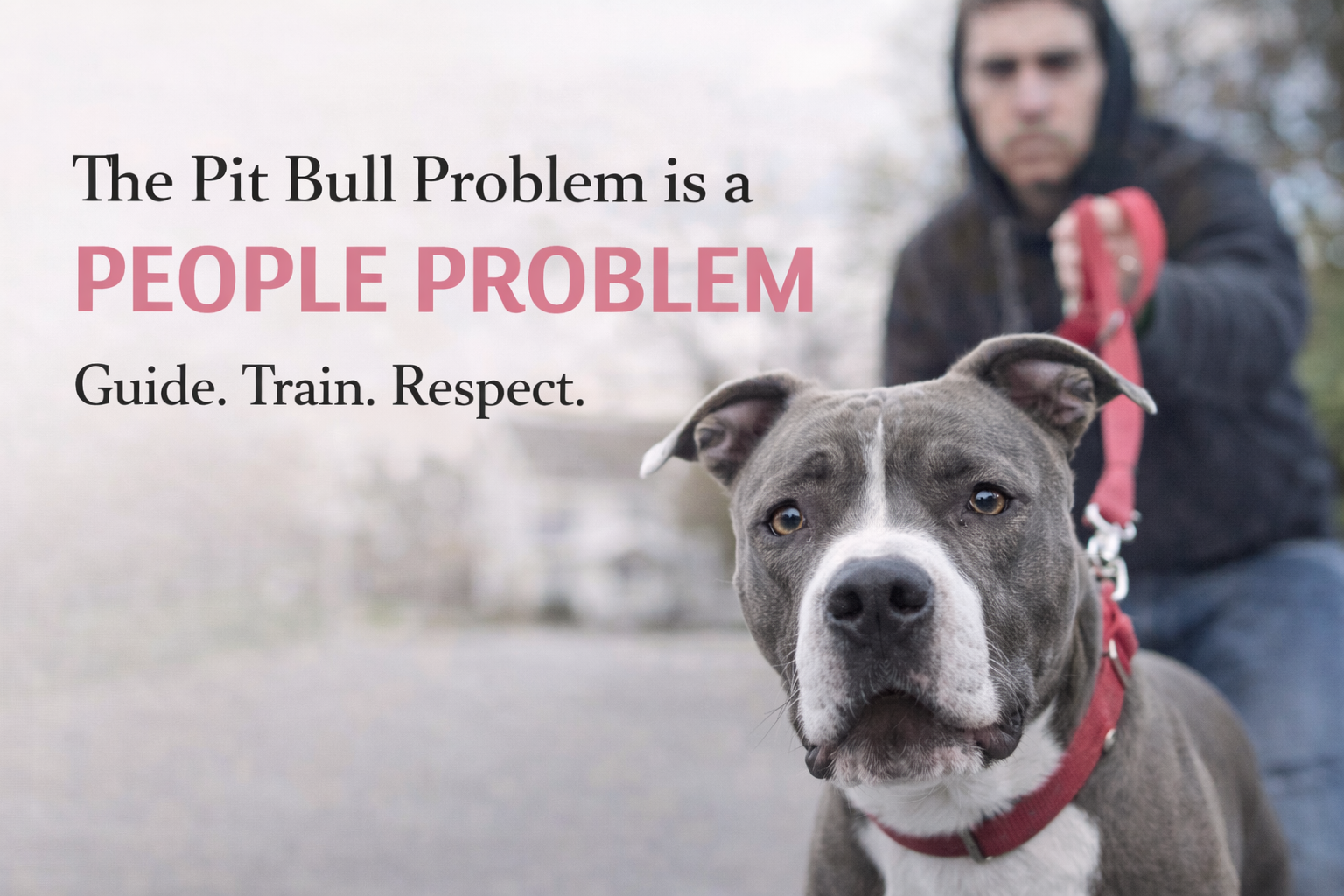
The narrative surrounding “pit bull” breeds often sparks intense debate, frequently centering on their perceived danger or aggression. However, framing the issue solely as a “pit bull problem” misses the fundamental truth: it is overwhelmingly a people problem. This article delves into the complexities of canine behavior, the profound impact of human actions, and the societal factors that contribute to the challenges associated with these powerful dogs, advocating for education, responsible ownership, and a shift in perspective.
Key Takeaways
- The term “pit bull” refers to a type of dog, not a single breed, encompassing several breeds like the American Pit Bull Terrier, American Staffordshire Terrier, and Staffordshire Bull Terrier.
- Aggression in dogs, regardless of breed, is primarily influenced by upbringing, environment, training, and owner responsibility, rather than inherent malice.
- Irresponsible ownership, including neglect, abuse, lack of socialization, and breeding for aggression, fuels the negative perception and behavioral issues in these dogs.
- Media sensationalism and breed-specific legislation often perpetuate stigma without addressing the root causes of dog-related incidents.
- True solutions involve comprehensive owner education, consistent training, early socialization, ethical breeding practices, and accessible resources for all pet owners.
Understanding the ‘Pit Bull’ Terminology: A Breed of Misconceptions
Before examining the “people problem,” it is crucial to clarify what constitutes a “pit bull.” This term is not a formal breed designation but rather a generic label applied to a group of dogs sharing similar physical characteristics, primarily a muscular build and blocky head. Breeds commonly categorized under this umbrella include the American Pit Bull Terrier, American Staffordshire Terrier, Staffordshire Bull Terrier, and sometimes even American Bulldogs or mixes thereof. This lack of a precise definition complicates discussions and contributes to widespread misunderstandings about their inherent nature.
Historically, many of these breeds were developed for working roles, including livestock herding and guarding, and unfortunately, for blood sports. However, their physical prowess and determination were often misconstrued as inherent aggression, leading to breeding practices that sometimes prioritized undesirable traits. Modern, reputable breeders focus on temperament, health, and conformation to breed standards, ensuring well-adjusted companions.
The Undeniable Impact of Irresponsible Ownership
The most significant factor influencing a dog’s behavior, particularly in breeds with the strength and drive of “pit bulls,” is the quality of its ownership. Dogs are products of their environment, and human actions — or inactions — directly shape their temperament and societal integration. When issues arise, they almost invariably trace back to human responsibility.
Lack of Socialization and Training
Early and consistent socialization is paramount for any dog, allowing them to confidently navigate various environments, people, and other animals. Without proper exposure, dogs can develop fear-based aggression or become overwhelmed by new stimuli. Similarly, consistent training provides structure, builds a strong bond between dog and owner, and teaches appropriate responses to commands and situations. An untrained dog, regardless of breed, becomes a liability.
Abuse, Neglect, and Exploitation
Tragically, many “pit bulls” fall victim to abuse, neglect, or exploitation. Dogs subjected to cruelty often develop severe behavioral problems as a coping mechanism, manifesting as fear, anxiety, or aggression. Furthermore, some individuals acquire these dogs with malicious intent, using them for illegal dogfighting or to project an image of toughness. These abhorrent practices distort the breed’s reputation and create genuinely dangerous animals, entirely due to human depravity.
Breeding Practices: Ethical vs. Exploitative
The source of a puppy profoundly impacts its future. Ethical breeders prioritize health, temperament, and genetic soundness, meticulously screening parent dogs and providing early socialization. In contrast, irresponsible backyard breeders or puppy mills often focus solely on profit, neglecting health screenings, proper care, and ethical considerations. Such practices can perpetuate undesirable traits, including nervousness or aggression, creating dogs predisposed to behavioral challenges, irrespective of their general breed type.
This stark contrast highlights the importance of choosing a reputable source for any canine companion. For example, at Puppy Heaven, we stand by
over 20 years of puppy expertise
, ensuring that
every puppy is vet-checked, ethically bred, and raised with love
. Our commitment extends to providing
healthy, trained, socialized miniatures
, guaranteeing a solid foundation for new family members. We believe
100% Love in Every Service
contributes to well-adjusted puppies, setting a benchmark for responsible pet acquisition, whether you’re considering a tiny companion or a larger breed.
Beyond Genetics: The Environment’s Overwhelming Influence
While genetics play a role in a dog’s inherent tendencies, they do not dictate destiny. A dog’s temperament is a complex interplay of genetic predisposition and environmental factors. Even a dog with a genetic lineage suggesting a calm demeanor can develop behavioral issues if raised in an unsuitable environment, and conversely, a dog from a challenging background can thrive with consistent positive reinforcement and dedicated ownership.
The critical difference often lies in an owner’s commitment to understanding their dog’s specific needs, providing appropriate physical and mental stimulation, and seeking professional guidance when necessary. Dogs, like people, require consistent care, education, and positive experiences to flourish.
The Role of Media and Stigma
Media portrayal significantly shapes public perception of “pit bulls.” Sensationalized headlines often focus on dog bite incidents involving these breeds, contributing to a narrative of inherent danger. This selective reporting can overlook the vast majority of well-behaved “pit bulls” and the complex circumstances surrounding incidents, such as owner negligence, provocation, or misidentification of the breed.
This negative stigma has led to breed-specific legislation (BSL) in many areas, banning or restricting ownership of certain breeds. However, extensive research and the experience of numerous animal welfare organizations demonstrate that BSL is largely ineffective. It fails to reduce dog bites, disproportionately affects responsible owners, and diverts resources from genuinely effective strategies like enforcing leash laws, promoting responsible ownership, and providing dog bite prevention education for children and adults.
Embracing Responsible Pet Ownership: The Universal Solution
The solution to the “pit bull problem” — and indeed, any dog-related issue — lies squarely with promoting and enforcing responsible pet ownership for all breeds. This encompasses several key pillars:
1. Thoughtful Breed Selection
Choosing a dog breed that aligns with one’s lifestyle, living situation, and experience level is crucial. A high-energy dog in a sedentary household, or a powerful breed with an inexperienced owner, is a recipe for potential challenges. For those seeking companionship in a smaller package, Puppy Heaven offers
Toy & Teacup Puppies For Sale
that are known for their adaptability to various living situations. Our high-end pet boutique specializes in the smallest and cutest breeds, such as Bichapoo Puppies For Sale In Las Vegas or Teacup & Toy Beagle Puppies for sale in Las Vegas, which are
healthy, trained, and socialized miniatures
. With
over two decades of commitment
and
30,000+ Puppy orders
, we understand the importance of matching the right puppy with the right family, facilitating
luxury bonds with miniature marvels
.
2. Early Socialization and Consistent Training
All dogs benefit from early and ongoing socialization. Enroll puppies in classes, expose them positively to new experiences, and continue training throughout their lives. This builds confidence and ensures a well-adjusted companion.
3. Proper Care and Veterinary Attention
Regular veterinary check-ups, appropriate nutrition, and a safe, stimulating environment contribute to a dog’s overall well-being. A healthy dog is more likely to be a happy and well-behaved dog. At Puppy Heaven, we guarantee the well-being of our teacup and toy puppies, as
each puppy undergoes thorough health checks, ensuring they’re healthy and happy before joining your family
.
4. Ethical Sourcing and Breeding
Support ethical breeders who prioritize health, temperament, and responsible breeding practices. Avoid backyard breeders, puppy mills, and online sellers who cannot provide transparency about their breeding program or puppy’s lineage. Puppy Heaven maintains an
established reputation of over 20 years
for providing
world’s cutest and most exquisite puppies
, all backed by our
unwavering guarantee
.
5. Financial Preparedness and Support
Owning a dog is a significant financial commitment. Responsible owners ensure they can cover the costs of food, vet care, training, and emergencies. Recognizing this, Puppy Heaven offers flexible Financing solutions. You can
get Your Dream Puppy Today, Pay Later! Secure up to $20,000 with Puppy Financing
, with
quick approval in 5 minutes
. This includes flexible options to
cover shipping costs
, and if needed, you can
apply with multiple financing companies for your perfect companion
. This commitment ensures that financial constraints do not prevent loving homes from adopting, contrasting sharply with situations where pets are acquired impulsively without thought for ongoing care.
6. Secure Confinement and Supervision
Dogs must be securely confined to prevent escapes and potential incidents. Fences, leashes, and responsible supervision are essential for public safety and the dog’s well-being.
7. Accessible Resources and Community Support
Communities play a vital role by offering affordable training classes, low-cost veterinary care, and educational programs. Organizations like Puppy Heaven, serving Las Vegas, Nevada, and Sunrise, Florida, demonstrate a commitment to pet owners, even extending services with
nationwide puppy delivery options
.
Experience seamless joy with our delivery options! Choose Standard Puppy Shipping for secure, stress-free travel or elevate your excitement with Personal Puppy Hand Delivery, where our team ensures a smooth journey from kennel to your loving arms. Your happiness, our priority at Puppy Heaven. Choose the perfect delivery for your pint-sized bundle of joy!
Conclusion
The “Pit Bull Problem” is not an inherent flaw in a specific type of dog but rather a complex issue rooted in human behavior, choices, and societal factors. By shifting the focus from blaming a breed to empowering responsible pet ownership, promoting ethical breeding, and fostering community education, we can create safer environments for both people and dogs. Every dog, regardless of its perceived breed type, deserves a chance to be a cherished, well-adjusted member of a loving family. The onus is on us, as humans, to make that a reality.
FAQ
Q1: Is breed-specific legislation (BSL) effective in reducing dog bites?
A1: Extensive research by veterinary organizations, animal welfare groups, and governmental studies consistently shows that BSL is not effective in reducing dog bites. It targets specific breeds rather than addressing the true causes of aggression, such as irresponsible ownership, lack of training, abuse, and neglect. Effective solutions focus on owner education, enforcement of leash laws, and comprehensive dog bite prevention programs for all breeds.
Q2: Do “pit bulls” have an inherently aggressive temperament?
A2: No dog breed is inherently aggressive. While certain breeds may possess stronger prey drives or physical capabilities, individual temperament is largely shaped by genetics (from ethical breeding), early socialization, training, and the environment in which the dog is raised. Many “pit bulls” are known for their affectionate and loyal nature when properly socialized and trained by responsible owners.
Q3: What makes a responsible “pit bull” owner?
A3: A responsible “pit bull” owner, like any responsible dog owner, provides early and consistent socialization, positive reinforcement training, proper nutrition, regular veterinary care, and a safe, stimulating environment. They understand the breed’s physical and mental exercise needs, ensure secure containment, and are committed to lifelong learning about canine behavior. They also lead by example, promoting positive perceptions of their dog and breed.
Q4: Where can I find a responsibly bred dog?
A4: To find a responsibly bred dog, research reputable breeders who prioritize health, temperament, and genetic screening. Look for transparent operations, positive references, and a willingness to answer all your questions. Alternatively, consider adopting from shelters or rescue organizations that perform thorough temperament assessments and match dogs with suitable families. For those interested in smaller, ethically bred companions, Puppy Heaven, with its
20+ Years of puppy expertise
and
Puppies with a Guarantee
, offers
Toy & Teacup puppies for sale
like Yorkies, Pomeranians, Maltese, Shih Tzus, and Frenchies, ensuring a healthy start for your new family member.
Q5: How can Puppy Heaven help me find a pet companion?
A5: Puppy Heaven specializes in high-quality teacup and toy breed puppies, providing a luxurious and ethical experience. With our
global puppy matchmaking service
, we ensure each puppy is vet-checked, ethically bred, and raised with love. We offer
nationwide puppy delivery options
and flexible
Puppy Financing Solutions
to make acquiring your dream puppy seamless. Visit our boutiques in Las Vegas, NV, or Sunrise, FL, or explore our services online. Your perfect companion is waiting;
let’s make tails wag!