If you’re looking for a dog that fits in your lap, loves everyone it meets, barely sheds, and has the intelligence of a scholar — the Toy Goldendoodle might just be your perfect match.
These tiny, teddy-bear-faced dogs have taken the designer dog world by storm, and for good reason. They pack every wonderful trait of the beloved Goldendoodle into a compact, apartment-friendly body. But before you fall head-over-heels (and trust us, you will), there’s a lot to understand about this breed — from how they’re bred, to how big they get, how long they live, and what it really costs to raise one.
We’ve done the deep research so you don’t have to. Let’s get into it.
What Is a Toy Goldendoodle?
A Toy Goldendoodle is a cross between a Golden Retriever and a Toy Poodle — usually achieved by breeding a Toy Poodle with a smaller Miniature Goldendoodle, or in some cases, a petite Golden Retriever line. The result is a small, curly-to-wavy coated dog with an enormous personality.
The Goldendoodle breed itself was first intentionally developed in the 1990s in the United States and Australia, inspired by the success of the Labradoodle. Breeders wanted to combine the Golden Retriever’s legendary gentle temperament with the Poodle’s intelligence and low-shedding coat. The Toy version came later as demand grew for an even smaller, more portable companion dog.
Unlike their Standard Goldendoodle cousins who can tip the scales at 90 pounds, Toy Goldendoodles stay compact and manageable throughout their lives. They’re not recognized by the AKC as a separate breed (since Goldendoodles are designer dogs, not purebreds), but they are widely recognized by breeders, owners, and the Goldendoodle Association of North America (GANA).
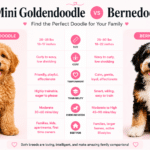
Toy Goldendoodle vs Mini Goldendoodle: What’s the Difference?
This is one of the most common questions we get, and honestly, the lines can blur depending on the breeder. Here’s the clearest breakdown:
| Feature | Toy Goldendoodle | Mini Goldendoodle |
|---|---|---|
| Weight | 10–25 lbs | 25–35 lbs |
| Height | 10–13 inches | 13–20 inches |
| Poodle parent | Toy Poodle | Miniature or Toy Poodle |
| Best for | Apartments, seniors, small spaces | Families, active owners |
| Fragility | Higher (requires careful handling) | Moderate |
| Price | Often higher (harder to breed) | Slightly lower |
The Toy is notably smaller, more fragile, and often commands a higher price because producing a consistent, healthy Toy-sized Goldendoodle takes more care and generations of selective breeding. If you’re comparing the two in detail, check out our Toy vs Mini Goldendoodle comparison guide.
Size and Weight — How Big Do They Get?
Toy Goldendoodles are the smallest in the Goldendoodle family. Here’s what you can expect when fully grown:
- Weight: 10–25 pounds
- Height: 10–13 inches at the shoulder
- Females: typically 10–18 pounds
- Males: typically 15–25 pounds
Most Toy Goldendoodles reach about 50–70% of their adult weight by 6 months of age and are usually fully grown by 10–12 months — faster than their larger cousins because smaller dogs mature earlier.
Toy Goldendoodle Growth Chart (Approximate)
| Age | Estimated Weight |
|---|---|
| 8 weeks | 2–4 lbs |
| 3 months | 4–7 lbs |
| 6 months | 6–14 lbs |
| 9 months | 8–20 lbs |
| 12 months (adult) | 10–25 lbs |
Keep in mind: size depends significantly on genetics, the specific parents used, generation type, diet, and lifestyle. A responsible breeder who tracks parent weights will give you the most accurate size prediction.
Toy Goldendoodle Generations Explained
When shopping for a Toy Goldendoodle, you’ll hear terms like F1, F1B, and Multigen constantly. These refer to the generation of the dog — which determines coat type, size consistency, and often health outcomes.
F1 Toy Goldendoodle — First generation: 50% Golden Retriever + 50% Toy Poodle. These tend to have the most genetic diversity, which supports overall health. However, size and coat can vary more than later generations.
F1B Toy Goldendoodle — Backcross: an F1 Goldendoodle bred back to a Toy Poodle. This produces a dog that is roughly 75% Poodle, 25% Golden Retriever. The coat is curlier, lower-shedding, and more allergy-friendly. Size is usually more predictable.
F1BB Toy Goldendoodle — Another backcross, this time 87.5% Poodle. Even curlier coat, even lower shedding. But some of the Golden Retriever temperament can be diluted.
F2 Toy Goldendoodle — Two F1 Goldendoodles bred together. More genetic variation, size range can be wide.
Multigeneration (Multigen) — Multiple generations of Goldendoodle-to-Goldendoodle breeding. Breeders can achieve the most size consistency and coat predictability here. This is often what serious breeders work toward.
For most families wanting a hypoallergenic, consistent-sized Toy Goldendoodle, F1B or Multigen is usually the safest bet.
Temperament and Personality
Here’s the honest truth: the Toy Goldendoodle’s personality is the reason people become completely obsessed with this breed.
They are:
Incredibly affectionate. These dogs love their people deeply. They form strong bonds with every family member and will follow you from room to room like a fluffy shadow.
Highly intelligent. Both the Golden Retriever and the Poodle rank among the top 5 most intelligent dog breeds. Toy Goldendoodles inherit that brainpower. They pick up commands fast, learn tricks easily, and can even be trained as therapy or emotional support animals.
Social butterflies. They generally love strangers, children, other dogs, and even cats when properly socialized. They rarely show aggression, though they can bark to alert you.
Playful and energetic (in a small body). Don’t let their tiny size fool you — Toy Goldendoodles have a playful, fun-loving spirit. They enjoy games, short bursts of running, and interactive toys.
Emotionally sensitive. This is important to understand. These dogs feel everything. Harsh training, prolonged loneliness, or a stressful household can genuinely affect them. They thrive in loving, calm environments.
Prone to separation anxiety. Because they bond so strongly with their people, Toy Goldendoodles can struggle when left alone for long periods. If you work full-time away from home, this is something to plan around.
Are Toy Goldendoodles Hypoallergenic?
The word “hypoallergenic” is slightly misleading in the dog world — no dog is 100% allergy-free. However, Toy Goldendoodles (especially F1B and higher generations) are among the lowest-shedding dogs available.
What makes them allergy-friendly:
- Poodle genes reduce shedding dramatically
- Their curly coat traps dander instead of releasing it into the air
- Smaller body = less overall dander production compared to larger breeds
If allergies are a concern in your home, an F1B or Multigen Toy Goldendoodle with a curlier coat is your best option. We also recommend spending time with the specific puppy before committing if allergies are severe.
Read more in our guide on hypoallergenic dog breeds.
Coat Types and Colors
Toy Goldendoodles can have three main coat types:
Curly coat — Tight, Poodle-like curls. Lowest shedding. Requires the most brushing to prevent matting.
Wavy coat — The classic “fleece” coat. Loose waves that are soft, low-shedding, and the most popular. Easier to maintain than curly.
Straight coat — Closer to the Golden Retriever side. Softer and silkier but sheds more. Less common in Toy Goldendoodles.
Colors
Toy Goldendoodles come in a beautiful range of colors:
- Cream / Apricot / Gold — The classic, most popular shades
- Red — A rich, striking coppery tone
- Chocolate / Brown — Deep, warm tones
- Black — Less common but stunning
- Parti — Two-tone patterns (white with another color)
- Merle — Marbled patterns (requires careful breeding to avoid health complications)
- Phantom — Multi-colored markings, similar to a Doberman pattern
- Sable — Tips of the fur are darker than the base color
Colors can lighten significantly as puppies grow. That rich red puppy you fell in love with may become a warm apricot adult. Ask the breeder about color change history in their lines.
Grooming Your Toy Goldendoodle
This is where many new Toy Goldendoodle owners get surprised. The coat that makes them so adorable? It requires consistent maintenance.
Brushing
Brush your Toy Goldendoodle 2–3 times per week minimum, and ideally daily. Their curly or wavy coats mat easily, especially behind the ears, under the collar, and in the armpits. Mats can pull on the skin, cause pain, and lead to skin infections if ignored.
Use a slicker brush and a steel comb. Work through the coat in sections, all the way down to the skin — not just the surface.
Bathing
Bathe every 4–6 weeks using a gentle, dog-appropriate shampoo. Over-bathing strips the coat’s natural oils. Under-bathing leads to a dull, tangled mess.
Professional Grooming
Plan for professional grooming every 6–8 weeks. A typical session includes a bath, blow-dry, trim, nail clip, and ear cleaning. Costs range from $60–$120 per session depending on your location and coat condition.
Annual grooming costs typically run $480–$1,440 for full professional care.
Haircut styles popular for Toy Goldendoodles:
- Teddy bear cut — Round face, fluffy body, the classic doodle look
- Puppy cut — Uniform short length all over, easy to maintain
- Lamb cut — Shorter on the body, fluffier on the legs
- Lion cut — Long mane around the face, trimmed body (bold choice!)
Ear Care
Toy Goldendoodles often inherit Poodle-like ear canals — narrow and covered by floppy ears — which traps moisture and creates the perfect environment for infections. Clean ears every 2 weeks and ask your vet or groomer to pluck excess hair from the ear canal as needed.
Dental Care
Small dogs are notoriously prone to dental disease. Brush your Toy Goldendoodle’s teeth 2–3 times per week using dog-safe toothpaste. Dental chews and water additives help too. Start this habit young so it becomes routine.
Nail Trimming
Trim nails every 3–4 weeks. Overgrown nails affect posture and gait, and can curl into the paw pad.
Exercise and Activity Needs
Despite being a small dog, the Toy Goldendoodle is not a couch potato. They need daily physical and mental stimulation to stay balanced and happy.
Daily exercise: 30–45 minutes for an adult Toy Goldendoodle. This can be split into two shorter walks plus some indoor play.
Mental stimulation: Puzzle feeders, hide-and-seek games, learning new tricks, and sniff walks are all excellent for their intelligent minds. A bored Toy Goldendoodle can become a destructive, noisy Toy Goldendoodle.
What they love:
- Short walks through the neighborhood
- Playing fetch in the backyard or a fenced park
- Tug-of-war and interactive toys
- Swimming (most Goldendoodles love water — it’s in their DNA)
- Agility and trick training sessions
What to avoid: Because of their small size and delicate bone structure, avoid high-impact activities like jumping from heights, rough play with much larger dogs, and over-exercise as puppies (whose growth plates are still developing).
Training Your Toy Goldendoodle
Good news: Toy Goldendoodles are genuinely one of the easiest dogs to train. Their Poodle-and-Golden Retriever heritage gives them brains, eagerness to please, and sensitivity to their owner’s emotions — a combination that makes training feel more like a game than a chore.
Key training tips:
Start early. Begin basic training as soon as your puppy comes home, typically around 8 weeks. The window between 8–16 weeks is critical for socialization and foundational learning.
Use positive reinforcement only. Reward-based training (treats, praise, play) works beautifully for this breed. Harsh corrections backfire — these dogs are sensitive and will shut down if made to feel anxious or afraid.
Keep sessions short. 5–10 minutes per session, 2–3 times a day, is more effective than one long 30-minute drill. Their attention span is good but not endless.
Priority commands to teach first: Sit, stay, come, leave it, and “off” (for jumping). Then move into loose-leash walking.
Socialize thoroughly. Expose your puppy to different people, environments, sounds, and other animals during the first 4 months. Well-socialized Toy Goldendoodles grow into confident, friendly adults.
Address separation anxiety early. Practice short alone-time sessions from puppyhood. Crate training helps create a safe, comfortable space when you need to be away.
Want a step-by-step guide? Check out our puppy training basics for new owners.
Health Issues to Know About
Toy Goldendoodles are generally healthy dogs, especially when bred responsibly. But being informed about potential health concerns is part of being a great owner.
Common health issues in Toy Goldendoodles:
Patellar Luxation — The kneecap slips out of position. Very common in small breeds. Mild cases may need no treatment; severe cases require surgery. A reputable breeder will screen parent dogs for this.
Hip Dysplasia — Less common in small dogs but still possible from the Golden Retriever side. An abnormal formation of the hip socket that can lead to arthritis.
Progressive Retinal Atrophy (PRA) — An inherited eye condition that can lead to blindness. Responsible breeders screen parent dogs with DNA tests.
Von Willebrand’s Disease — A blood clotting disorder that can come from the Poodle side. DNA-testable and screenable by reputable breeders.
Dental Disease — Very common in small dogs because their teeth are crowded into a smaller jaw. Regular brushing is non-negotiable.
Ear Infections — The floppy ear + narrow canal combo creates moisture buildup. Regular cleaning and monitoring prevents most issues.
Hypoglycemia (Low Blood Sugar) — Particularly in very small (under 10 lb) Toy Goldendoodle puppies. Tiny dogs have less fat reserve and can crash quickly without regular feeding. Important to monitor closely in puppyhood.
Allergies — Both Golden Retrievers and Poodles are prone to environmental and food allergies. Watch for excessive scratching, licking paws, or recurring ear infections.
What to ask your breeder:
Before purchasing a Toy Goldendoodle puppy, ask whether parent dogs have been tested for:
- Hip and elbow dysplasia (OFA certified)
- Eye conditions (CAER certified)
- Cardiac health
- Von Willebrand’s Disease (DNA tested)
- Patellar luxation
A good breeder will share health clearances without hesitation.
Lifespan — How Long Do They Live?
This is where the Toy Goldendoodle truly shines as a long-term companion. Smaller dogs consistently outlive larger ones across all breeds, and the Toy Goldendoodle is no exception.
Typical Toy Goldendoodle lifespan: 13–17 years
Many well-cared-for Toy Goldendoodles reach 17–20 years, significantly outliving Standard Goldendoodles (which typically live 10–13 years). The Poodle genetics also help — Miniature and Toy Poodles commonly live 12–16 years.
Compare that to the Mini Goldendoodle (12–16 years) and the Standard (10–13 years), and the Toy’s longevity advantage is clear.
Factors that influence lifespan:
- Quality of breeding and genetic screening
- Diet and maintaining a healthy weight
- Regular veterinary care
- Daily exercise and mental stimulation
- Dental health (often overlooked!)
- Preventing accidents (fragile small dogs need supervision)
Feeding and Diet
Toy Goldendoodles have small stomachs, fast metabolisms, and specific nutritional needs that differ from larger dogs.
How much to feed:
- Puppies (8–12 weeks): 3–4 small meals per day to prevent hypoglycemia
- Puppies (3–6 months): 3 meals per day
- Adults (6+ months): 2 meals per day
Portion sizes depend on the dog’s weight, activity level, and the specific food’s caloric density. Always follow the food manufacturer’s guidelines and adjust based on your dog’s body condition.
What to feed:
Look for a high-quality small-breed dog food with:
- A named meat protein (chicken, salmon, turkey) as the first ingredient
- No artificial fillers, corn syrup, or mystery meat meals
- Added omega-3 fatty acids for coat health
- Appropriate calcium levels for small breeds
Budget roughly $50–$60 per month on quality food for a Toy Goldendoodle.
Avoid overfeeding:
Small dogs gain weight rapidly. Obesity in dogs is the most common preventable health condition and puts stress on joints, the heart, and overall longevity. Keep treats to under 10% of daily calories and use measuring cups, not free-feeding.
Are They Good with Kids and Other Pets?
With children: Yes, but with supervision. Toy Goldendoodles are gentle, loving, and patient — but their small size makes them vulnerable to accidental injury from enthusiastic toddlers. Teach children how to handle small dogs gently. These dogs are better suited to families with older children (6+) who understand gentle play.
With other dogs: Generally excellent. Goldendoodles are social creatures and usually get along well with other dogs of all sizes. Introduce new dogs gradually on neutral ground for the smoothest transition.
With cats: Surprisingly good, especially when introduced young. Many Toy Goldendoodles and cats become the best of friends.
As therapy or emotional support dogs: Outstanding. Their gentle, intuitive nature and hypoallergenic coats make them popular therapy dogs in hospitals, schools, and senior care facilities. If this interests you, look into therapy dog certification.
Living with a Toy Goldendoodle (Apartment vs House)
One of the Toy Goldendoodle’s biggest selling points is their adaptability. Unlike larger breeds that need a yard, Toy Goldendoodles thrive in:
- City apartments — As long as they get daily walks and playtime, they’re perfectly happy in smaller spaces
- Houses with yards — Bonus enrichment, but not required
- Homes with seniors — Gentle, manageable, and deeply companionable
- Homes with remote workers — They’ll be your happiest coworker
What they don’t do well with: Being alone for 8+ hours daily. If your lifestyle involves long workdays away from home, consider a dog walker, doggy daycare, or a companion pet.
Toy Goldendoodle Price: How Much Do They Cost?
Let’s talk numbers, because the Toy Goldendoodle is not a budget purchase.
Puppy purchase price:
From a reputable breeder, Toy Goldendoodles typically cost $2,000–$5,000. The higher end reflects:
- Rare coat colors (red, phantom, merle)
- F1B or Multigen generations
- Extensive health testing of parent dogs
- Geographic location (urban areas cost more)
Be cautious of any listing under $1,000 — this is usually a red flag for puppy mills, inadequate health screening, or poor socialization practices.
Annual ownership costs:
| Expense | Annual Cost |
|---|---|
| Food | $600–$720/year |
| Professional grooming | $480–$1,440/year |
| Routine vet care | $300–$600/year |
| Dental care | $150–$300/year |
| Toys & accessories | $100–$300/year |
| Training (first year) | $200–$500 |
| Pet insurance | $300–$600/year |
| Total (ongoing) | $1,500–$3,500/year |
First-year costs are higher due to vaccinations, spay/neuter, starter supplies (crate, bed, leash, bowls, etc.) which can add $500–$1,500 upfront.
Most Toy Goldendoodle owners spend $125–$250 per month on their dog after the initial puppy purchase.
How to Find a Reputable Breeder
Finding the right breeder is arguably the most important decision in the entire process. The breeder determines your puppy’s health, temperament, and quality of life in those crucial early weeks.
Signs of a reputable Toy Goldendoodle breeder:
✅ Welcomes you to visit their facility (or does virtual tours)
✅ Provides health clearances for both parent dogs (OFA, CAER, DNA testing)
✅ Raises puppies in a home environment, not kennels
✅ Begins early socialization (ENS – Early Neurological Stimulation, puppy culture, etc.)
✅ Asks you questions — they care where their puppies go
✅ Has a health guarantee and take-back policy
✅ Doesn’t have puppies always available (good breeders have waiting lists)
✅ Is transparent about generation, parents, and lineage
Red flags to avoid:
🚫 Puppies available immediately with no waiting list
🚫 Multiple breeds always available
🚫 Won’t answer questions about health testing
🚫 Ships puppies without a prior relationship
🚫 Prices suspiciously low (under $1,000)
🚫 No contract or health guarantee
You can also explore Toy Goldendoodle puppies available at PuppyHeaven — all our breeders are carefully vetted.
Toy Goldendoodle Pros and Cons
No honest guide is complete without this. Here’s the real picture:
Pros:
- Incredibly affectionate and gentle
- Highly intelligent — easy to train
- Low shedding / allergy-friendly (especially F1B+)
- Long lifespan (13–17 years)
- Adaptable to apartments and small spaces
- Excellent with seniors, singles, and families
- Comes in beautiful coat colors and styles
- Great therapy and emotional support dogs
Cons:
- Regular grooming is a real commitment (time and cost)
- Prone to separation anxiety
- More fragile than larger dogs — needs careful supervision
- Harder to find from reputable breeders (high demand, lower supply)
- Can be expensive upfront ($2,000–$5,000)
- Dental health requires active management
- Not ideal for families with very young or rough children
FAQs
How big do Toy Goldendoodles get?
Most Toy Goldendoodles weigh 10–25 pounds and stand 10–13 inches tall at the shoulder when fully grown.
Do Toy Goldendoodles shed?
Very little, especially F1B and higher generations. Their Poodle-dominant genes make them one of the lowest-shedding dog breeds available.
Are Toy Goldendoodles good for first-time dog owners?
Yes — their intelligence and eagerness to please make them very trainable. They’re forgiving of mistakes and respond beautifully to patience and positive reinforcement.
How long can a Toy Goldendoodle be left alone?
Adult dogs can typically handle 4–6 hours alone with proper crate training and enrichment. Beyond that, they may develop separation anxiety. Puppies should never be left alone for more than 2–3 hours.
Do Toy Goldendoodles bark a lot?
They can be moderate barkers, usually alert barking (at the door, strangers, sounds). With proper training and socialization, excessive barking is manageable.
What’s the difference between an F1 and F1B Toy Goldendoodle?
An F1 is 50% Golden Retriever and 50% Poodle. An F1B is 75% Poodle and 25% Golden Retriever (backcrossed). F1Bs are curlier, lower-shedding, and more allergy-friendly.
Are Toy Goldendoodles good therapy dogs?
Absolutely. Their calm, affectionate, and highly intuitive nature combined with a hypoallergenic coat makes them among the best therapy dog candidates.
What should I feed my Toy Goldendoodle puppy?
A high-quality small-breed puppy food with a named meat protein as the first ingredient. Feed 3–4 small meals per day to prevent hypoglycemia in puppyhood.
Final Thoughts
The Toy Goldendoodle is not just a trend. It’s a thoughtfully bred, deeply loving companion that fits beautifully into modern life — whether you live in a high-rise apartment in Mumbai or a house in the suburbs.
They’ll make you laugh, keep you company, and give you unconditional loyalty for potentially 15–17 years. But they also demand your time, your grooming commitment, and your emotional presence. Go in with eyes wide open, and you’ll find yourself wondering how you ever lived without one.
Ready to find your perfect Toy Goldendoodle puppy? Browse available puppies at PuppyHeaven — where every litter comes from health-tested, loving breeders.